A new artificial intelligence tool has been developed to predict the survival probability of cancer patients using a single facial photograph. This technology aims to estimate health status and mortality risk from a patient’s appearance, potentially assisting physicians in making treatment decisions.
How the FAHR-Face AI Model Works
According to Bloomberg on the 19th (local time), researchers at Massachusetts General Brigham in the United States developed an AI model named Cancer Survival AI (FAHR-Face) to predict mortality risk in cancer patients by analyzing facial images. The research results were published in the medical journal The Lancet Digital Health.
Researchers trained the AI-based model using over 40 million facial images and subsequently used approximately 34,000 facial photos of cancer patients to predict mortality risk. Among these, ‘FAHR-Face Survival’ analyzes a patient’s facial photograph to calculate a risk score. The analysis revealed that patients with higher scores had a greater likelihood of dying within 90 days.
Estimating Biological Age and Clinical Implications
Developed alongside the survival tool, ‘FAHR-Face Age’ is a model designed to estimate age through the face, showing a mean absolute error of 5.1 years between chronological and estimated ages. Raymond Mak, a radiation oncologist at the Mass General Brigham Cancer Institute who led the study, stated that AI can help grasp physiological reserve and mortality risk to a certain extent using just a single facial photo.
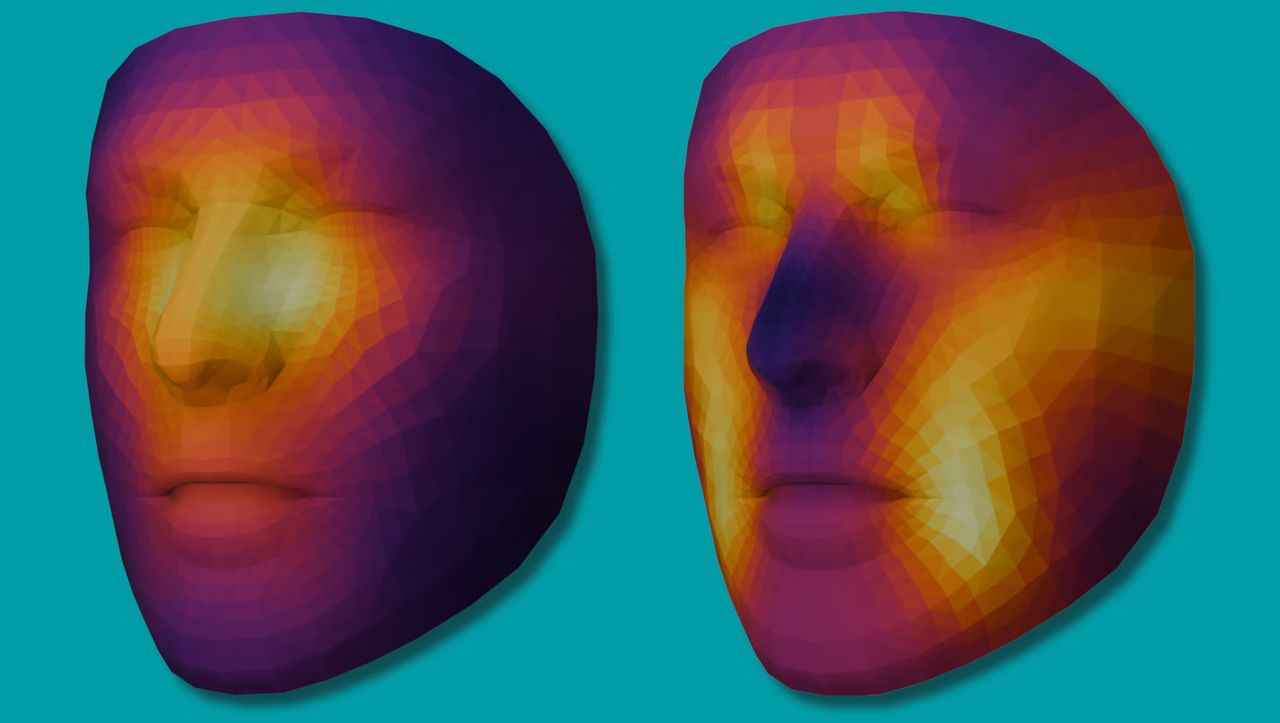
The researchers also confirmed that the AI primarily analyzes the bridge of the nose and the area under the eyes to determine risk levels. The model demonstrated consistent performance in distinguishing mortality risk across patient groups varying in age, gender, race, and cancer type.
Expert Perspectives and Limitations
Reviewing these results, Dr. Mak noted he learned that ancient Greek physician Hippocrates described sunken eyes, pinched noses, and hollow temples as signs of impending death. While doctors evaluate health status by looking at patients, Mak explained that estimating remaining lifespan for terminally ill patients remains challenging, and this tool could help reduce overtreatment and guide treatment directions.
However, experts point out that additional validation is necessary before applying the tool in actual medical settings. Miroslav Bover, a professor at the University of Surrey in the UK who did not participate in the study, praised the validation using an independent cohort of about 5,000 Dutch cancer patients, but noted that it remains unproven whether the AI captures something doctors fail to notice. He emphasized that while a statistical link between facial appearance and survival rate was identified, it has not yet been proven that the AI measures actual biological aging processes or provides clinically useful additional information.