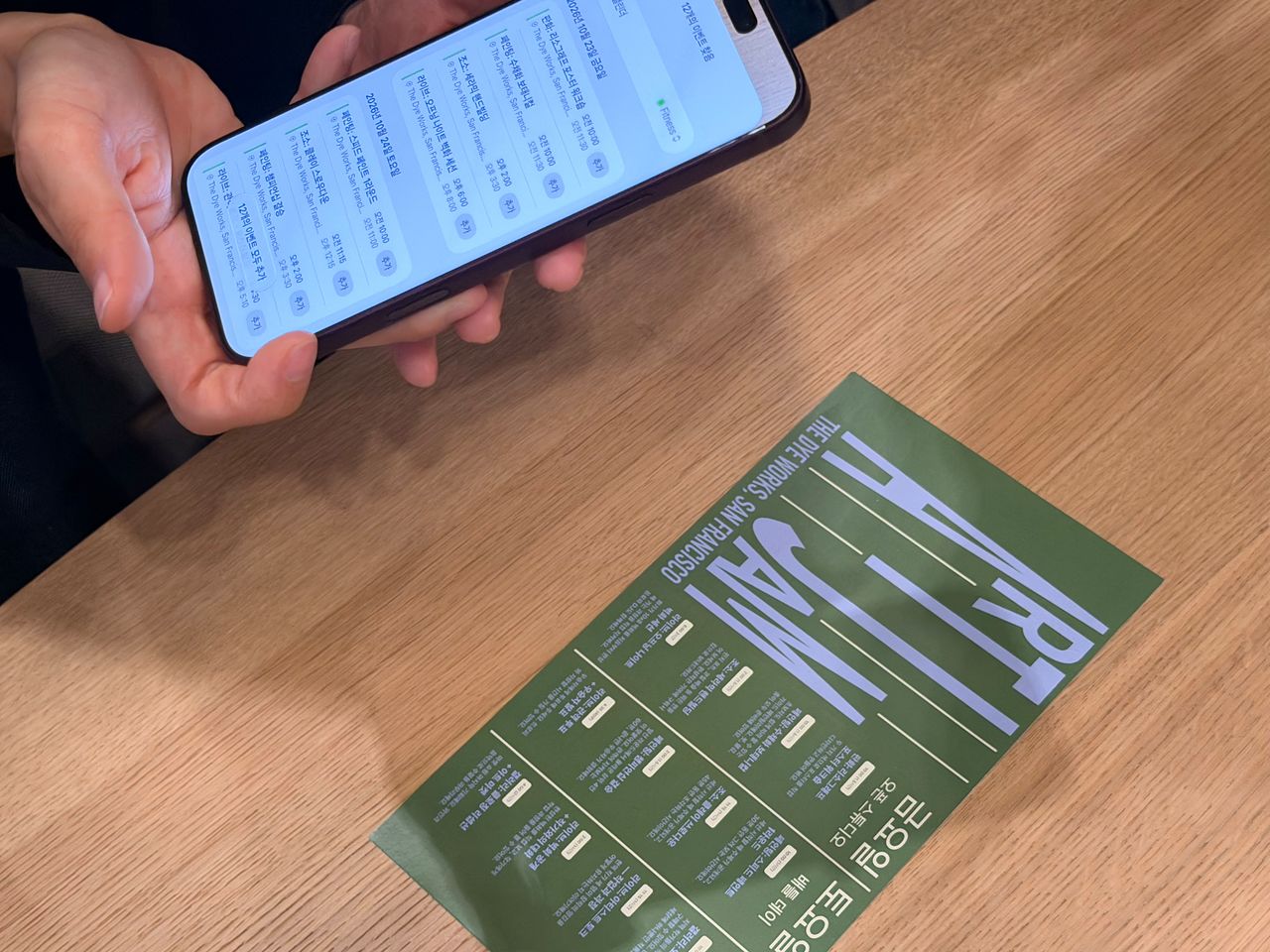
When an event flyer was captured using the iPhone camera, a phrase reading ‘Add to Calendar’ appeared. Tapping it automatically organized the event name, date, and time printed densely on the flyer into a list ready to be added to the calendar. Apple’s artificial intelligence assistant, Apple Siri AI, successfully eliminates the tedious task of reading instructions and manually entering schedules one by one.
According to the information and communications technology (ICT) industry on the 21st, Apple is expanding its multi-language services—including Korean—next week, following the launch of the English beta service last month. Unveiled at the Apple Worldwide Developers Conference (WWDC) in June, Siri AI is a next-generation AI assistant built on Google’s ‘Gemini’ technology, completely redesigning the traditional Siri. It is characterized by its ability to understand user history and screen content, find necessary information, and execute tasks across supported apps.
During a demonstration on this day, when a user preparing a year-end party asked, ‘Is there anyone with food restrictions?’, Siri AI searched past text message logs and found that an acquaintance could not eat spicy food. It also helped with grocery shopping preparations. When a user displayed a pumpkin porridge recipe on the screen and requested, ‘Put these ingredients into my notes and organize them by supermarket section,’ Siri AI categorized the ingredients and created a shopping list in the Notes app.
In addition, Apple explains that Siri AI can find hotel reservation numbers or old photos in emails and draft emails reflecting the usual tone and format exchanged with the recipient. It also supports ‘Visual Intelligence,’ which reads information from objects or documents through the camera to answer questions or assist with schedule registration. Users can review past conversations in a dedicated app or continue conversations started on an iPhone on other devices such as an iPad or Mac.
Because Siri AI utilizes various personal information stored on the smartphone, security is paramount. Apple applied an ‘on-device’ processing method that keeps computations within the device rather than sending them to external servers whenever possible. For tasks requiring greater processing power, it utilizes ‘Private Cloud Computing,’ ensuring that data sent to the server is used solely for request processing and is never stored. Apple stated that it designed the system so that even the company itself cannot access this data.
Can Siri AI overturn Apple’s reputation as an ‘AI latecomer’? Previously, Apple previewed a ‘personalized Siri’ in June 2024, but actual release delays drew criticism from the market. Going beyond the simple convenience demonstrated, proving its practical usefulness in real-world usage environments remains a challenge. Currently, it is supported primarily through basic apps and a few overseas applications like Outlook, Craft, and WhatsApp, meaning integration with major domestic apps like KakaoTalk and Naver will likely dictate user satisfaction.
Siri AI will be provided in the form of an iOS software update and is available starting from the iPhone 15 Pro, iPhone 15 Pro Max, and iPhone 16 models onwards.