
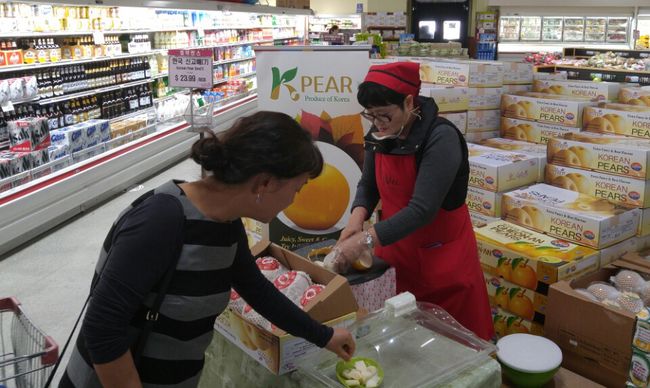
Fruit tasting sections at various Korean markets in Southern California are becoming increasingly popular among customers. From pears to blueberries to kiwis to persimmons to apples, the winter fruits at markets are available in diversity.
The most commonly available fruits at the tasting stands are in season and newly harvested ones. There are also lesser popular dragon fruits and Hami melons.
“Dragon fruits and Hami melons often don’t sell regularly throughout the year,” said H Mart’s Torrance branch manager Ju-yeol Park. “But thanks to the taste test, those fruits are nearly selling out now. Customers have been reluctant to buy them although they were curious about how they’d taste,
so the taste test has definitely helped a lot.”
The taste of the fruits obviously vary depending on the season, making winter a perfect time to introduce customers while those lesser known fruits are ripe.
“Some customers often secretly taste the fruits that aren’t available for taste testing,” said Galleria Market’s Northridge branch manager John Yoon. “We even had to put a plastic bag for customers to throw away peanut shells as they’d taste them regardless of whether or not the peanuts were available for taste tests. So we figured it would better to just make those foods available to freely taste.”
Case in point, fruit tasting leads to increase in sales. Some markets go on to say that they have experienced 50 percent increase in fruit sales after making certain items available to taste. Even non-Korean customers flock into Korean markets during this time of the year to purchase the popular pears, persimmons, grapes and chestnuts from Korea.
“Fruit tasting is always enjoyable as I get to taste so many different ones,” said Daniel Washington, who visited a Korean market. “It’s also efficient for consumers since it prevents us from purchasing fruits that taste bad and then just throwing them out.”
By Sung Yeon Lee