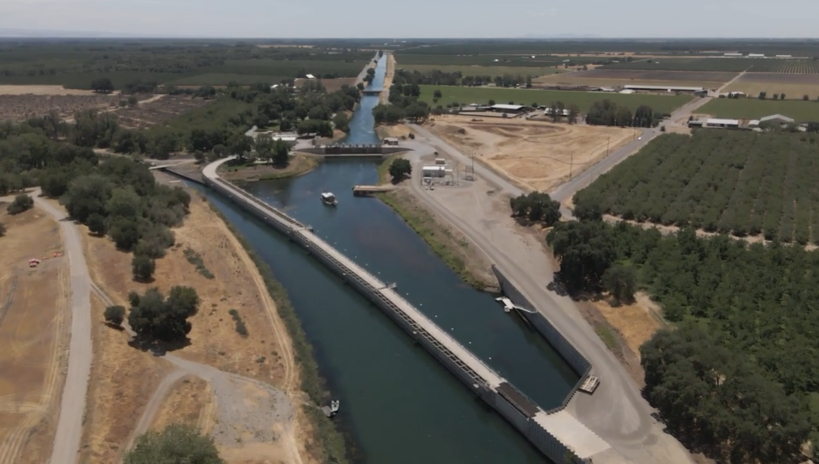
California is moving forward with the construction of the Sites Reservoir, marking the state’s largest water storage project in approximately 50 years.
The California Water Commission unanimously approved the water rights application for the Sites Reservoir, to be located near Maxwell northwest of Sacramento, on the 4th. This decision brings the multi-decade discussion surrounding the large-scale reservoir project into a formal implementation phase.
The Sites Reservoir will be established across roughly 15,000 acres in a valley northwest of Sacramento. The project involves building two large dams standing about 300 feet tall and nine smaller dams to store water diverted from the Sacramento River.
The maximum storage capacity is projected at 1.5 million acre-feet. Once completed, it will be the largest reservoir built in California since the New Melones Dam was finished in 1979.
State authorities expect the Sites Reservoir to serve as a critical water infrastructure facility to address severe droughts and floods driven by climate change. The strategy involves capturing water during periods of heavy rainfall and supplying it during dry spells to enhance water supply reliability throughout California, including Southern California.
Joaquin Esquivel, chairman of the California Water Commission, stated that as droughts and floods become increasingly extreme, the necessity to store water during heavy rainfall periods is growing, and the Sites Reservoir is designed precisely to address these conditions.
The total project cost is estimated at approximately $7 billion. The state and federal governments have agreed to cover about one-third of the expenses. Furthermore, over $1.3 billion has been allocated through Proposition 1, a water bond measure approved by voters in 2014.
Meanwhile, opposition from environmental groups and indigenous communities persists. Critics argue that large-scale water diversion from the Sacramento River could damage native fish habitats such as salmon, while worsening ecological issues like water quality degradation and algae blooms. Concerns have also been raised that the reservoir construction could submerge ancestral burial grounds and sacred sites of indigenous peoples.
In response, the Water Commission maintains that the project has undergone thorough environmental reviews and that appropriate environmental protection measures have been established.
The Sites Reservoir targets the commencement of construction in 2027 with a completion goal set for 2034.