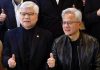
Uncertainties surrounding Nvidia CEO Jensen Huang are rapidly emerging as a critical variable for the South Korean semiconductor industry. Depending on the investigation’s outcome, any potential leadership instability at Nvidia could trigger widespread repercussions across the entire artificial intelligence (AI) ecosystem.
Implications of Leadership Uncertainty at Nvidia
According to Nvidia, the company’s board of directors issued an official statement stating that while an investigation into the allegations has been launched, there is currently no reason to believe national security or Nvidia’s confidential information has been compromised. The board expressed continued trust in CEO Huang and the executive team.
However, the broader impact on the industry largely depends on Huang’s ultimate fate. Confirmation of severe issues such as data leakage could amplify pressure for a leadership change. Having founded Nvidia in 1993, Huang has personally overseen everything from product development to client partnerships and major investments. Notable examples include his “kkaebu” meeting last year with Samsung Electronics Chairman Lee Jae-yong and Hyundai Motor Group Executive Chair Euisun Chung, alongside a pork belly dinner meeting this June with SK Group Chairman Chew Tae-won, LG Group Chairman Koo Kwang-mo, and Naver Global Investment Officer Lee Hae-jin. While Apple successfully transitioned to Tim Cook following Steve Jobs, Nvidia’s succession plan remains largely undefined.
Impact on Investment and Memory Chip Suppliers
Another immediate variable is the effect on the tech investment ecosystem. Nvidia has continuously backed neo-cloud providers by funding or facilitating capital to secure AI computing power. This practice fueled ongoing debates over circular financing, where funded firms use the capital to repurchase Nvidia chips. Market analysts note that because financial institutions prioritize trust, any severe escalation could prompt them to reassess funding support.
Nvidia also remains a major buyer purchasing massive volumes of High Bandwidth Memory (HBM) from Samsung Electronics and SK Hynix. Samsung currently supplies its 6th-generation HBM4 for Nvidia’s next-gen AI accelerators, with discussions ongoing for 7th-gen HBM4E and 8th-gen HBM5. Meanwhile, SK Hynix signed a multi-year technology partnership with Nvidia last June to co-develop next-generation AI memory semiconductors.
Resilience and Counterarguments in the Supply Chain
Despite these mounting risks, counterarguments persist within the industry. Some market insiders suggest that given the fierce tech hegemony competition between the US and China, the overarching growth momentum of the AI sector will not easily halt. Even if Nvidia stumbles, competitors like AMD could step in to capture displaced demand.
Long-Term Supply Agreements (LTAs) established by Samsung Electronics and SK Hynix are also viewed as buffers against short-term shocks. Experts point out that South Korea’s advanced memory technology and manufacturing prowess cannot be easily replaced overnight, suggesting that the true vulnerability lies in a supply chain overly dependent on a single company and the broader AI ecosystem rather than Huang’s personal standing.