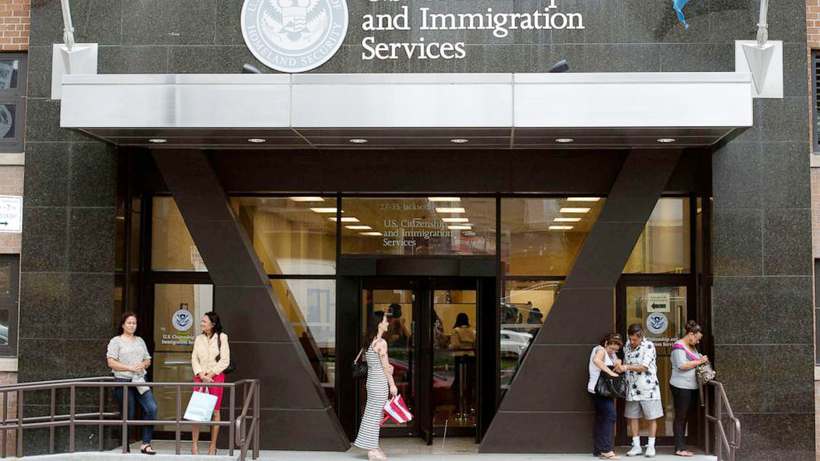
Amid a nationwide green card backlog exceeding 1.5 million cases, the Chicago USCIS field office is currently facing approximately 28,000 pending applications awaiting review.
Chicago Ranks 9th Nationwide in Pending Green Card Cases
According to data recently released by U.S. Citizenship and Immigration Services (USCIS) for the third quarter (April–June) of the 2026 fiscal year, a total of 27,863 Adjustment of Status (I-485) applications were pending at the Chicago field office as of June 30. This represents an increase of 2,598 cases (10.3%) from the previous quarter’s 25,265 cases, making it the 9th largest volume among 90 USCIS field offices nationwide.
The backlog has intensified primarily because new application volumes significantly outpaced processing numbers. Between April and June, the Chicago office received 6,253 new applications, while total completions—consisting of 2,511 approvals and 409 denials—reached only 2,920. New receipts were 2.1 times higher than the processing output, creating a gap of 3,333 cases.
Sharp Decline in Processing Performance Drives Up Delays
Compared to the same period last year, new applications saw a modest 1% increase from 6,192 to 6,253, but processing output dropped steeply by 56% from 6,617 to 2,920 cases. While application rates remained steady, the drastic reduction in completed cases led to a surging waitlist.
Pending cases also registered a major year-over-year jump. Unresolved applications at the Chicago office rose 17.8% over a single year, moving from 23,659 at the end of the April–June quarter in 2025 to 27,863.
Family and Humanitarian Petitions Make Up the Majority
A breakdown of the pending cases shows that family-based immigration formed the largest share at 10,396 cases (37%), followed closely by humanitarian applications including refugees and asylum seekers at 10,275 cases (37%). Employment-based immigration accounted for 6,714 cases (24%), with other categories making up 478 cases (2%). Family and humanitarian petitions combined account for roughly 74% of the total backlog.
USCIS noted that processing times can fluctuate based on application volume, office-specific workloads, staffing allocations, requests for evidence, and the individual complexity of each case.