From ‘Green Fish’ to ‘Burning’, Lee Chang-dong has consistently depicted realms that remain forever out of reach. In his cinematic world, love has always taken the shape of an impossibility. The characters Mak-dong and Mi-ae in ‘Green Fish’ met right in the middle of organized crime and relentless violence.
It was an impossible romance from the very beginning. The love in ‘Peppermint Candy’ starts from a place of already having been lost. A single piece of candy handed over by Soon-im serves as a token of a time to which one can never return. The romance in ‘Oasis’ was only complete within the imaginations of the two protagonists, viewed as a crime in the eyes of the world. The love in ‘Secret Sunshine’ is never fully confessed; Jong-chan simply lingers by her side. Mija in ‘Poetry’ replaces love by dedicating a single poem to a deceased girl. In ‘Burning’, Hae-mi vanishes, and love evaporates before the immovable wall of social class.
Yet, Lee Chang-dong has now put forward a work titled ‘Possible Love’. Stories of romance usually rely on impossibility because love that comes too easily lacks narrative purpose. Thus, this title hardly sounds like one belonging to a typical romance film. The unreachable distance that Lee has portrayed throughout his life becomes a question for the very first time in this movie: Can we cross that gap? The shift embedded in the word ‘possible’ serves as the core of the film.
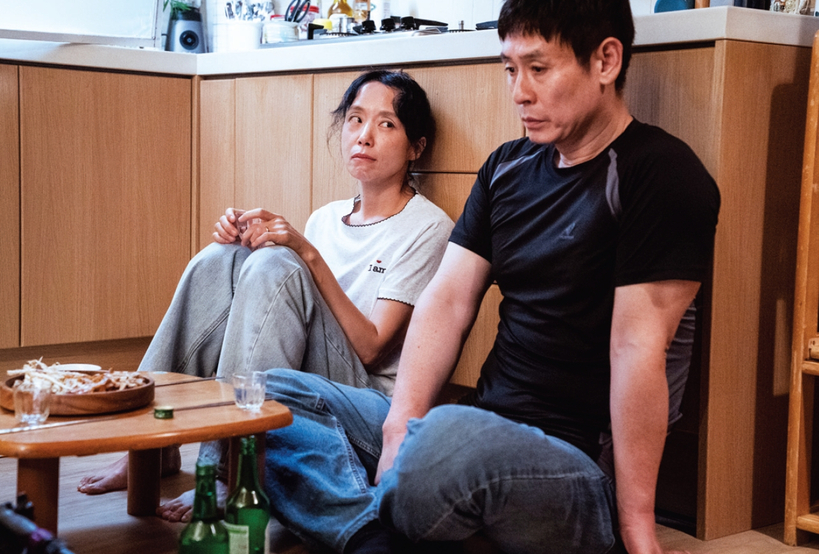
The movie begins with the final commandment of the Ten Commandments: “Do not covet.” Hoseok, played by Sol Kyung-gu, is a dismissed worker from a major corporation. Having endured a general strike and a forced police crackdown, he is no longer the man he used-to-be. While his body is physically at home, his mind remains trapped at that traumatic site. His wife Mi-ok, portrayed by Jeon Do-yeon, works at a mask factory while caring for her husband and young son. Into the lives of this couple steps Yeji, a documentary director (played by Jo Yeo-jeong) who wants to record the lives of laid-off workers. Yeji’s husband, Sang-woo (played by Jo In-sung), is a wealthy man lacking nothing. Triggered by the filming sessions, the two couples begin to share meals together. Mi-ok and Yeji grow close like friends, leading the four of them to take a vacation at a remote villa.
Who is the one doing the coveting? Mi-ok’s family side-eyes the abundance of the other side. Ironically, the privileged party covets the agony of poverty. To Yeji, Mi-ok’s tears are a scene she cannot afford to miss. When Mi-ok cries in front of the camera, Yeji’s eyes sparkle with excitement. Neither empathy nor greed, Yeji herself cannot quite tell what it is. Is filming another person’s pain an act of empathy or exploitation? In ‘Poetry’, Lee asked whether one had the qualification to write poetry. This time, he directs the question toward the director holding the camera—a question ultimately aimed at the audience and Lee Chang-dong himself.
Naturally, Bong Joon-ho’s ‘Parasite’ comes to mind. Both films herd the haves and the have-nots into a single space. Yet, their textures differ. ‘Parasite’ delineated class through stairwells and smells, ultimately inviting bloodshed. ‘Possible Love’ does not stop at merely denouncing disparity, nor does it deliver such violent explosions. Yeji’s household treats Mi-ok’s family to meals and grants them use of their vacation home. The boundary of social class hides neatly behind this kindness, making it all the more chilling. Yeji genuinely wants to help them, remaining oblivious to the fact that her sincerity turns these people into mere subjects for her lens.
Those few days at the villa test this very distance. They sit at the same dining table and gaze at the same ocean. Interspersed between these moments are the past timelines of Mi-ok and Hoseok—memories of layoffs, strikes, and shattered daily lives. The more peaceful the vacation scenery appears, the sharper the chasm between the two couples becomes.
Lee Chang-dong has harbored this narrative for a long time. Over a decade ago, he prepared a film addressing dismissed laborers but failed to bring it to fruition. Rather than directly denouncing labor issues, that narrative evolved into a profound inquiry concerning love. By weaving a potential political slogan into the lives of four individuals, this detour adds unprecedented depth to the film.
Love does not reside in grand gestures. As Mi-ok strolls down an alleyway, she hums Shim Soo-bong’s song ‘I Only Know Love’. She smiles, yet her expression remains heartbreakingly desolate. Mi-ok remarks that there is something deep inside her husband, and that she is afraid to draw it out. When Hoseok tells her in the car that she can cry if she wants to, Mi-ok finally bursts into tears. Whereas the love in his previous works was only complete within imagination and symbolism, the love here recognizes the scars of the other and grants them a safe space to weep. It is an embracing affection—not a love that is just beginning, but one that has endured long hardships together. In an era where jobs vanish and human connections fray, Lee seems to suggest that what ultimately holds life together is precisely this kind of love.
Jeon Do-yeon molds Mi-ok into a character where laughter and weeping overlap on a single face. Having reunited with Lee Chang-dong for the first time in 19 years since ‘Secret Sunshine’, she is being discussed as a potential candidate for Korea’s first Academy Award for Best Actress. It remains to be seen whether another historic milestone will follow Yoon Yuh-jung’s win for ‘Minari’. Sol Kyung-gu, returning from ‘Peppermint Candy’ and ‘Oasis’, steps back into the shoes of Lee’s wounded man. Hoseok is a character who endures bygone days through hardened shoulders rather than words. Meanwhile, Jo In-sung and Jo Yeo-jeong appear in an oversight by Lee Chang-dong for the first time. The four actors distribute the emotional weight evenly.
Certain aspects invite regret. Navigating the slow 164-minute pacing outside the theater environment on a television screen is no easy feat. Moments arrive where Sang-woo merely serves to verbally confirm the boundaries of social class; his remarks explaining to his wife that “they are different from us” prematurely articulate what the film ought to show. The premise of the documentary director is also a double-edged sword. While Lee’s self-reflection is honestly captured, it is hard to shake the impression that the film preemptively addresses criticisms the audience might otherwise raise. A lingering contradiction persists: a film interrogating the ethics of the camera nonetheless gazes upon the agony of Mi-ok’s family for too long.
‘Possible Love’ was awarded the Grand Jury Prize at the Venice Film Festival. In the United States, it opened in select theaters last month and became available on Netflix. Hollywood’s Egyptian Theatre is hosting a retrospective of Lee Chang-dong’s works through the 19th of this month, screening seven features ranging from ‘Green Fish’ to ‘Possible Love’ in one place. On the 18th, the director along with the four lead actors will greet the audience.
The silence and spatial margins of the film truly come alive on a large theater screen. Yet, what lingers longer than those cinematic spaces is the inquiry posed by the title. The film begins with the commandment not to covet, and for 164 minutes, it holds tightly onto a romance that might just possibly be attainable. That is precisely why a faint sense of hope is left resting in the hearts of the audience exiting the theater.
Is a love that does not covet truly possible? What kind of romance is Yeji’s, which utilized someone else’s suffering as mere documentary material? Lee Chang-dong, who spent a lifetime chronicling impossible love, speaks of possibility for the very first time. Is that possibility a beacon of hope, or is it an even more honest form of despair?