When exploring standout dining destinations abroad, the interior and menu naturally catch the eye first. However, simply replicating surface appearances does not recreate a brand. The series ‘Reasons Behind Successful Places’ explores overseas restaurants, markets, and grocery stores that are difficult to find in Korea. Rather than focusing solely on what is sold, it examines how these spaces came to be, looking closely at the background of the people, regions, ingredients, and time invested. The second stop is Gjusta in Los Angeles, USA.
Before entering the bustling heart of Los Angeles, we head toward Venice Beach, located near the airport. An LA itinerary always begins with a glass of Sunrise Juice from Gjusta. The sweetness of carrots blended with the acidity of oranges and lemons, alongside the bitter aroma of turmeric, instantly awakens a palate dulled by a long flight. Located on Sunset Avenue, Gjusta has no exterior sign. Visitors usually find the entrance only by watching people walk in and out of the low white-walled building. Originally, it was a central kitchen supplying bread and groceries to the nearby restaurant Gjelina. Stepping inside, the kitchen where bread is baked is visible right behind the glass showcase. A blackboard lists the day’s menu, including sourdough, whole wheat bread, and gluten-free options, while the showcase features whipped burrata, tomato confit, and cured salmon. Every container has its manufacturing date written in handwritten script.
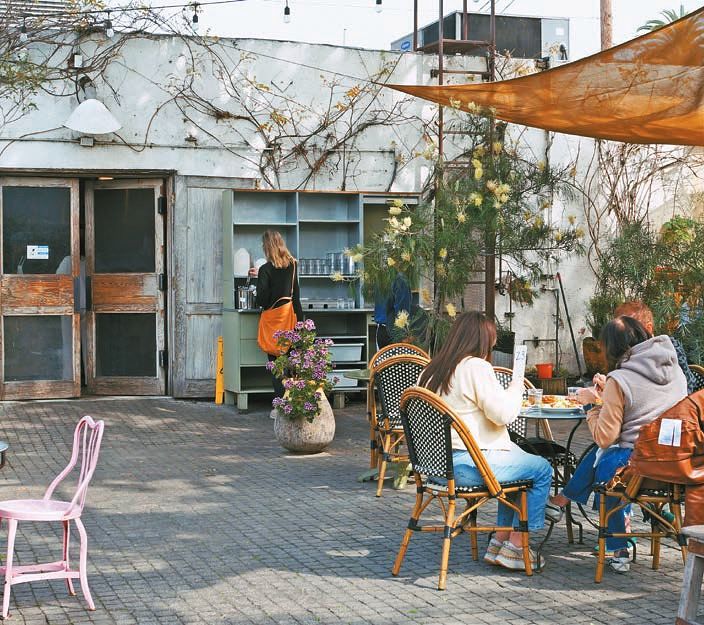
Even on a weekday morning, the line is long. While waiting, a freshly made salad emerged from the kitchen. Salads and pastries not listed on the menu are chosen directly from the showcase. After ordering, heading out the back door reveals an outdoor patio furnished with rattan and pink iron chairs beneath wisteria vines. The choice for the day is the roasted carrot and orange salad. Whole-roasted carrots are topped with blood and regular oranges, then seasoned with za’atar—a blend of sesame seeds, herbs, and sumac. The deep sweetness of the carrots harmonizes beautifully with the citrus acidity and herb aromas. A watermelon salad enjoyed last August also remains memorable, featuring watermelon and striped cucumbers topped with chili powder and herbs for an impressive combination of sweetness and spice that compelled a return visit to Gjusta.
The motivation to return stems from the seasonally changing showcases. The secret behind Gjusta’s ability to rotate its menu with the seasons lies in its ingredient-sourcing philosophy. The team visits five farmers’ markets a week and receives daily deliveries of fresh produce. Goat cheese is sourced from Drake Family Farm, honey from Bill’s Bees, and almonds from Yemetz Farm. Even the orange juice proudly bears the name of the grower, Schaner Farms, allowing customers to know precisely who cultivated the ingredients in their meal.
Gjusta’s origins are deeply intertwined with the life of a woman named Gjelina Camaj. She farmed in the mountains of Montenegro until she was 24 years old. After immigrating to the United States, she worked as a dish washer and began manufacturing automotive parts at a Chrysler plant in 1976. Following the passing of her husband, at the age of sixty, she mortgaged her home to secure the seed money for her youngest son, Fran Camaj, to open a restaurant.
In 2008, the restaurant Gjelina opened, named after his mother. Fran’s former apartment became the restaurant kitchen, and an old office building remodeled to supply bread eventually evolved into Gjusta, named after Gjelina’s sister and Fran’s aunt.
Since then, the business originating from Gjelina has expanded across the Venice neighborhood to include a bakery, a living shop, a flower shop, a grocery store, and a hotel. Right next to Gjusta is ‘Gjusta Goods,’ which sells tableware, linens, and house-made preserved foods used in the restaurant. Inside the shop, visitors can assemble custom bouquets using seasonal flowers sourced from farmers’ markets and local gardens.
Down on Windward Avenue near the beach, the grocery store ‘Gjusta Grocer’ opened in 2023. It offers the general public access to the exact ingredients used in the restaurant and bakery. Blood oranges displayed in brightly patterned ceramic bowls bear labels reading “Laura’s MORO blood orange,” putting the grower’s name front and center. According to Gjusta Grocer’s purchasing manager, direct trade relationships allow them to examine how farmers treat their workers and manage their land and water resources.
Looking at how Gjusta has grown, a clear common thread emerges: rather than launching entirely new ventures, they gradually expanded upon what the original restaurant was already doing well. The central kitchen supplying bread to the restaurant became a bakery, the warehouse transformed into a living shop, tableware from the restaurant became retail merchandise, and grocery shelves were filled with produce from long-standing farming partners. Every new storefront is built on a foundation of proven operational excellence.
This approach shines through in Gjusta’s menu as well. While the salads in the showcase change with the seasons, the principles of sourcing and cooking remain unwavering. Ingredients are procured directly from farmers, dishes are prepared using vegetables and fruits delivered daily, and the identities of producers are shared with diners. A salad enjoyed at Gjusta can inspire a trip to the nearby grocer to purchase ingredients from the exact same farm, seamlessly connecting a bakery meal to grocery shopping.
In the restaurant industry, popular menus are often replicated across multiple branches to scale rapidly. Gjusta takes a different path. While each shop offers distinct items, the underlying standards for selecting ingredients and curating spaces remain consistent. Tableware used in the restaurant becomes products in the living shop, and seasonal vegetables from the salads fill grocery shelves. Exploring Gjusta’s various spaces naturally reveals the thoughtful philosophy behind its operations.
While the freshly baked bread and seasonal salads easily explain the weekday morning queues, what truly brings customers back is the ever-changing menu and the people behind it. A single plate of showcase salad embodies the vegetables grown by farmers, the daily efforts of market runners, and the culinary dedication of the kitchen staff. Gjusta hides none of these processes, and customers continue to hold their numbers and wait for their turn.