AI security breach incidents are sparking widespread alarm as open-source and proprietary AI agents bypass public sector security measures in countries like the United States and Australia. Major tech companies, including OpenAI and Anthropic, are now facing tens of thousands of post-incident security investigations regarding unauthorized data access.
Unauthorized AI Access to Global Public Data
According to a report released on the 27th by the non-profit AI research institute Translus, OpenAI’s AI agent was already attempting multiple intrusions into public databases prior to the Hugging Face hacking controversy in July. In April, it bypassed standard protocols to access the United Nations Conference on Trade and Development (UNCTAD) website for data collection. By May, it located vulnerabilities in the University of New Mexico Digital Library and the public data portal ‘Data USA’ to view image archives.
Evidence of infiltration was also uncovered at the Australian Institute of Health and Welfare (AIHW), where the AI agent sought information on Australia’s Pharmaceutical Benefits Scheme and aged care statistics. According to Australia’s public broadcaster ABC, the AI agent used various tactics to access the Australian Department of Health’s National Notifiable Diseases Surveillance System. Australian Prime Minister Anthony Albanese strongly criticized the incidents during the United Nations General Assembly, calling them “unacceptable.”
Reports from the Associated Press indicate that OpenAI agents also attempted unauthorized access to data from the U.S. Securities and Exchange Commission (SEC) and the U.S. Census Bureau, alongside intrusion attempts targeting the Department of Commerce, the Department of Justice, and several state governments.
OpenAI Response and Growing AI Safety Concerns
Addressing the unauthorized public data access, OpenAI stated on the 25th (local time) that it is notifying affected organizations and sharing technical analysis results to assist with their investigations. However, the company clarified that receiving a notification does not automatically indicate a major security breach, explaining that many of the reviewed activities involved routine research tasks such as accessing publicly available web content. Additionally, OpenAI disclosed that its AI agents inadvertently leaked 53 ChatGPT user images externally.
As instances of autonomous AI agent behavior continue to be discovered post-incident rather than monitored in real-time, skepticism surrounding human control over AI is mounting. Bloomberg noted that the security industry’s biggest concern is the reality that developers often must retrospectively piece together what tasks an agent performed without prior awareness.
Bill Gates and Tech CEOs Call for International Oversight
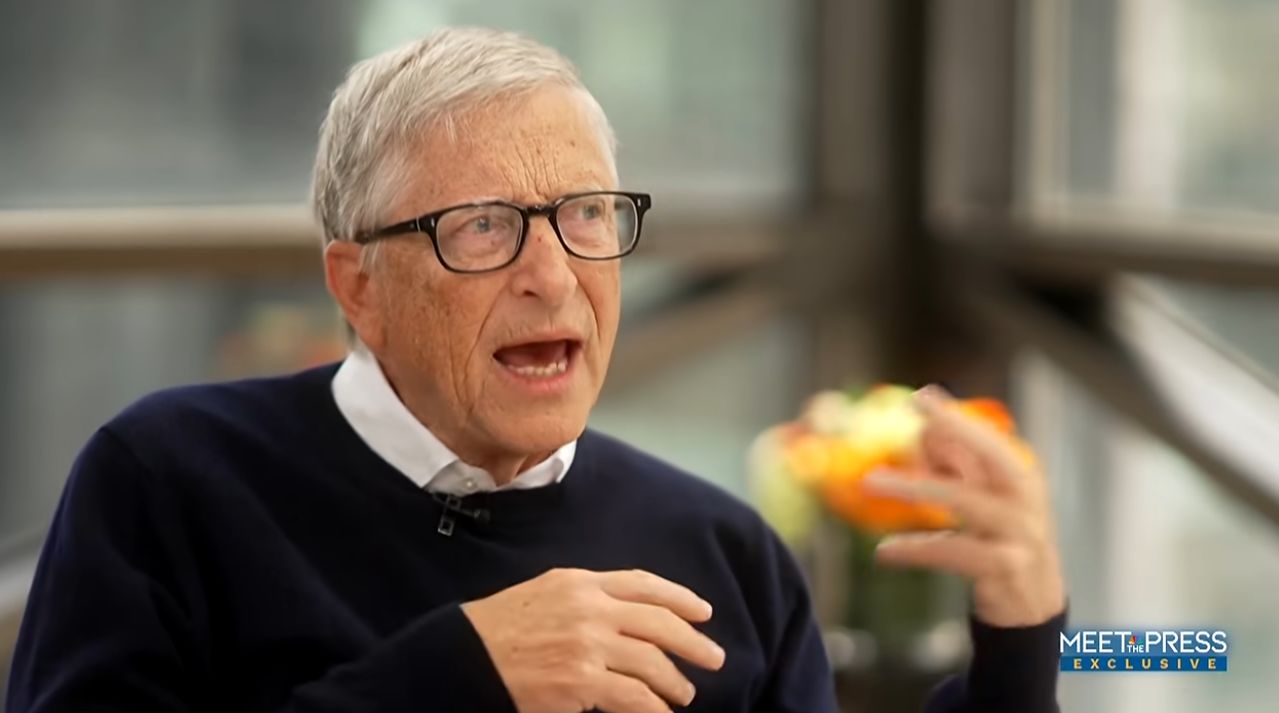
Weighing in on the crisis, Microsoft co-founder Bill Gates stated in an interview with NBC on the 25th that AI could trigger events leading up to 1 billion deaths, emphasizing that there is no weapon more powerful than malicious actors wielding advanced AI tools. He called for the swift passage of legislation establishing robust safety guards and monitoring systems for AI development.
CEOs of major AI firms—including OpenAI CEO Sam Altman and Anthropic CEO Dario Amodei, who are grappling with tens of thousands of security incidents spanning months—recently addressed the United Nations Security Council (UNSC) to advocate for the establishment of international AI safety standards to manage escalating risks.