AI Reshapes Job Market as Skilled Trades Gain Attention
AI skilled trades demand is increasing as the rapid expansion of artificial intelligence reshapes the job market and pushes many workers to reconsider their career paths.
As automation and AI begin replacing certain office-based tasks, interest is rising in technical professions that require hands-on work and are difficult for machines to replace.
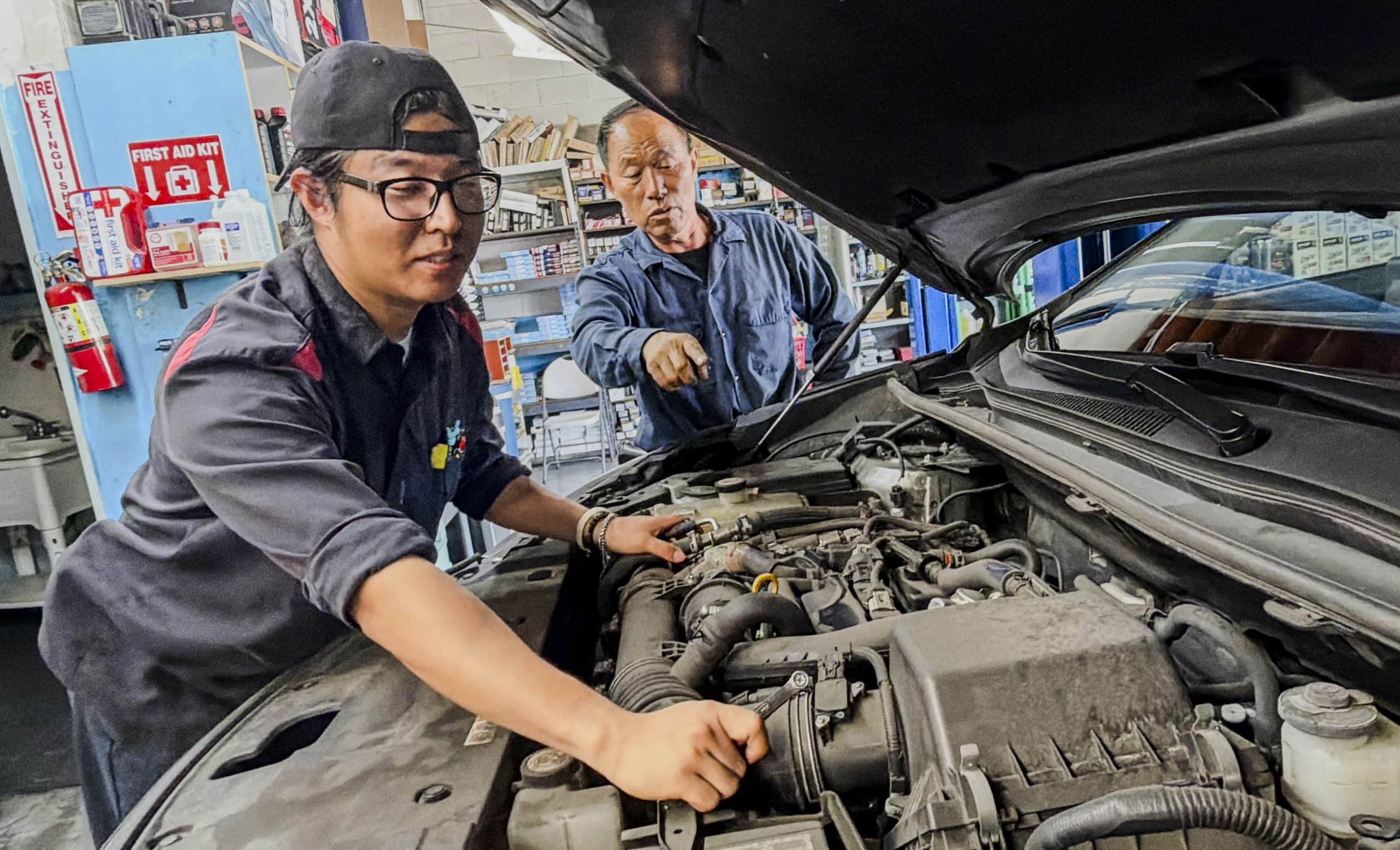
Joseph Kang, owner of MJ Auto, an auto repair shop in Los Angeles’ Koreatown, said he is already seeing the shift firsthand.
“In the past, many people viewed skilled trades as dirty or physically demanding jobs,” Kang said. “But younger generations are beginning to see them as stable careers. These are jobs AI cannot easily replace, and someone will always need to do them.”
Kang added that demand for technical workers is likely to continue growing, especially among younger people seeking long-term job security.
Younger Workers Shift Toward Technical Careers
Members of Generation Z — those born after 1997 — also increasingly view skilled trades as careers that are less vulnerable to automation.
John Kim, 22, a student studying electrical engineering at Los Angeles City College, originally planned to major in computer science. However, concerns about job stability in an AI-driven economy led him to change his academic path.
“When I go to class, the age range is very wide, from people in their 20s to those in their 60s,” Kim said. “Some already have jobs but come back to learn technical skills for the future. Others, like me, switched majors to learn skills that can be used directly in the field.”
Vocational training centers are also seeing a shift in who is enrolling.
Director of the Korean American Vocational Training Center said younger students now make up a larger portion of trainees.
“In the past, most of our students were older Korean immigrants,” she said. “Now we are seeing more people in their 20s and 30s who want to learn hands-on skills such as repair and sewing that require precision and manual work.”
The trend reflects changing perceptions about traditional “blue-collar” technical work compared with office-based “white-collar” jobs.
Trade Schools Report Growing Interest
Local broadcaster ABC7 Los Angeles reported that enrollment in trade programs at Los Angeles Trade-Technical College has increased in recent years.
Programs training electricians, plumbers, and welders have seen especially strong demand.
LATTC President Alfred McQuarters said construction-related training programs are particularly popular.
“Demand for programs such as HVAC, plumbing, carpentry, and welding continues to grow,” he said. “Applications for hands-on technical training programs have steadily increased.”
AI Skilled Trades Demand Backed by Labor Data
Government data supports the trend. According to the U.S. Bureau of Labor Statistics, the median annual wage for electricians was $62,350 in 2024.
Employment for electricians is projected to grow more than 9% by 2034, compared with the 3% average growth rate across all occupations.
Experts say the difference reflects a broader shift in the labor market. As some office-based jobs face automation risks, technical professions requiring physical work remain in demand.
At the same time, major technology companies have begun restructuring their workforces. Meta Platforms recently cut about 10% of its workforce — roughly 8,000 employees — as part of a restructuring that includes AI-related efficiency efforts.
Skilled Trade Employment Continues to Grow
The labor market already shows significant growth in technical occupations.
BLS data indicates that between 2021 and 2024:
- Electricians increased by more than 14%
- HVAC technicians grew by 11.2%
- Auto mechanics increased by 10.2%
Charlie Kang, who works at MJ Auto, said interest in learning technical repair skills has also grown in recent years.
“When a garage door or mechanical system breaks, AI cannot physically replace a motor or repair the problem,” Kang said. “Over the past two to three years, more people — especially those in their 30s and 40s — have asked about learning repair work.”
Survey Shows Changing Views on Career Stability
A recent survey by NerdWallet found that 77% of respondents believe skilled trades are more stable than office jobs.
In addition, 69% said a college degree is no longer as essential for securing a good career.
As artificial intelligence continues to transform industries, analysts say AI skilled trades demand will likely continue rising as workers seek careers that require human expertise and hands-on problem-solving.