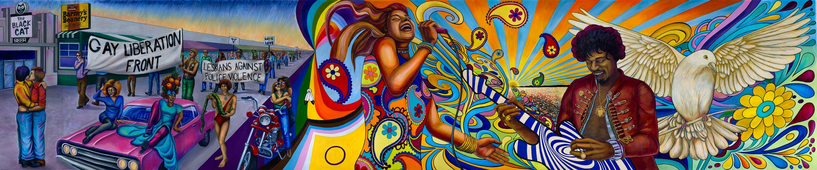
The history of the 1960s civil rights movement and social upheaval in the United States is being brought back to life through monumental public art. New mural sections for the iconic Los Angeles public art piece, the Great Wall of Los Angeles, have been unveiled to the public ahead of their official installation at the Skirball Cultural Center.
Running since October 22, the exhibition is scheduled to continue through February 28 of next year. Throughout the exhibition period, individual sections of the new mural will be unveiled sequentially.
The exhibition is titled The 1960s–A Generation on Fire: Judy Baca’s Great Wall of Los Angeles. It features two large-scale mural sections capturing the tumultuous era of the 1960s, including American civil rights movements, peace protests, and cultural revivals. These recently completed works will eventually be added to the existing Great Wall of Los Angeles.
The Great Wall of Los Angeles is a monumental public art project depicting the history of California. It was originally conceived in 1974 by artist Judy Baca as a monument for local residents, with the goal of visually recording the histories of diverse ethnic groups from prehistoric times through the 1950s.
Two years later, in 1976, Baca co-founded the Social and Public Art Resource Center (SPARC). Since then, she has collaborated with some 400 youths, artists, historians, and community members to create a 0.5-mile-long mural stretching along the Tujunga Wash of the Los Angeles River.
Over the decades, Baca and SPARC have continued expanding the mural’s historical narrative from the 1950s to the modern era. The latest works follow this ongoing tradition, focusing particularly on the generation that led the civil rights movements of the 1960s. The artwork highlights how the era’s moral courage, peaceful resistance, and cultural shifts impacted American society.
In addition to the completed murals, visitors can explore the creative process behind the project, including preparatory drawings and color studies. An immersive video installation guides visitors to the actual mural site along the LA River, showcasing the Tujunga Wash area. Furthermore, an interactive program titled MuralMemoirs allows visitors to share their own personal histories.
Detailed information is available on the official Skirball Cultural Center website.