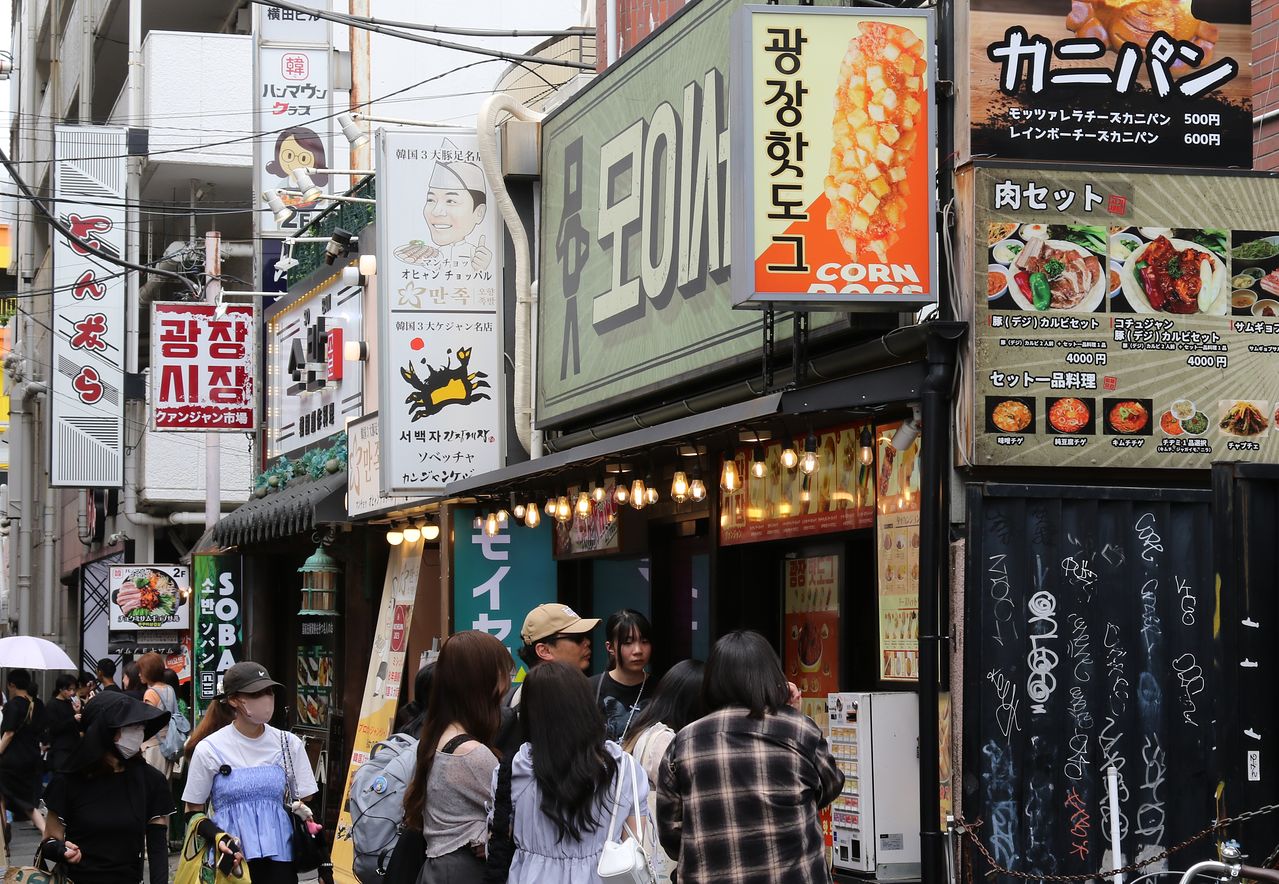
The use of Korean words and slightly modified expressions in Japanese advertisements and daily conversations is on the rise. This phenomenon is known as Hanbon-eo, a portmanteau of Korean and Japanese.
The New York Times (NYT) recently highlighted this trend in an article titled ‘The Surprising Origin of Japan’s New Catchphrase: Korean.’ The report noted that TV car commercials in Japan feature models speaking Korean phrases like ‘gwaenchanayo’ (it’s okay), and male leads in Japanese dramas naturally speaking lines in Korean.
Moeka Takamatsu, a college student and K-pop fan living in Tokyo, told the NYT that she frequently mixes Korean words like ‘jinjja’ (really) and ‘mianhae’ (sorry) into her daily conversations. She shared that although she knows nothing about Korea, the trend on social media makes her naturally use words like ‘gwaenchanha’ often.
The Cultural Power Behind the Trend
The NYT attributed this surge in Japanese use of Korean to the global appeal of Korean culture. This represents a striking contrast to historical periods like the Japanese colonial era about a century ago when the Korean language was heavily suppressed.
Analysts suggest that the success and influence of Korean culture—spanning K-pop, dramas, and beauty—have deeply embedded the Korean language into the lifestyle of Japan’s younger generation. Specifically, the year 2018, marked by massive waves led by BTS and BLACKPINK, served as a turning point where Japanese youth began embracing and enjoying the Korean language without hesitation.
Linguistic Proximity and Cultural Affection
Experts point out that the similar phonological structures of Korean and Japanese, combined with their geographic proximity, lower the linguistic barriers. Additionally, the lack of exact Japanese equivalents for specific Korean relational titles like ‘hyeong’ (older brother) or ‘unni’ (older sister) drives the direct adoption of these terms.
Choi Eun-kyung, a professor of Korean language at Kansai University in Japan, noted that the Korean language has become accessible to anyone regardless of ethnic background, serving as a genuine expression of affection for Korean culture.