〈SERIES〉
- Employment, Income & Business Trends
- Housing & Home Equity
- Investment & Retirement Planning
- Inflation & Living Costs
- Korean American Bank Usage
Rising Korean American Homeownership Expands Wealth Inequality
Homeownership rates among Korean Americans continue to climb, yet economic security has not improved uniformly across the community. While existing homeowners have gained substantial equity driven by years of rising real estate values, renter households face intensifying financial strain from escalating housing costs. As high rent payments hinder savings, property ownership has emerged as a defining factor dividing household wealth within the Korean American population.
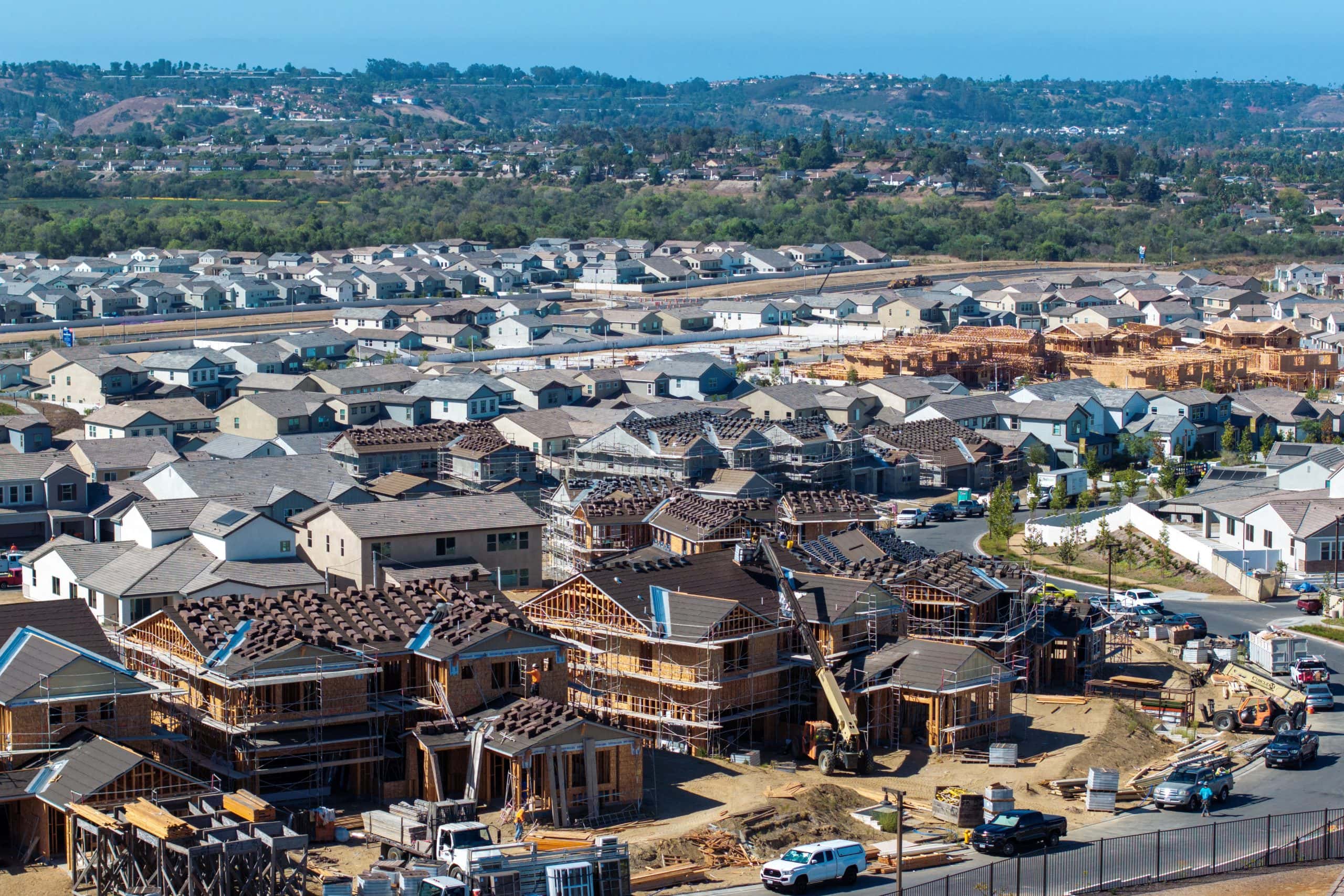
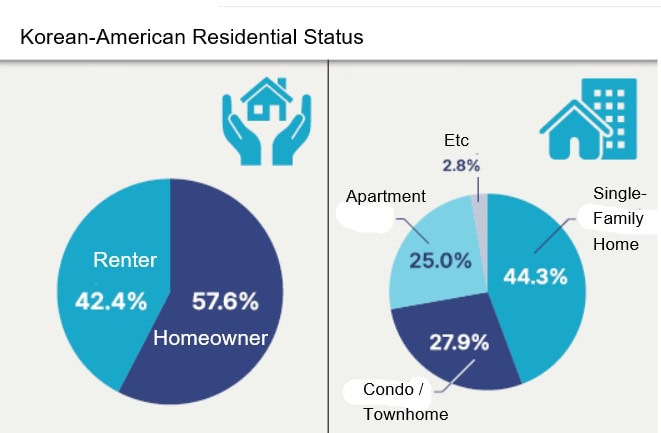
According to the 2026 Korean American Economic Life Survey sponsored by Bank of Hope, the homeownership rate among Korean Americans reached 57.6 percent this year, outpacing the renter proportion of 42.4 percent. The figures reflect a steady upward trend from 2020, when homeownership stood at 50.7 percent before rising to 55.4 percent in 2023. While the overall increase points to broader housing stability across the population, survey details highlight growing economic divergence between homeowners and renters.
The disparity is most apparent in asset valuation. Among Korean American homeowners surveyed this year, 22.3 percent reported property values between $600,000 and $799,999, while 19.9 percent held homes valued between $800,000 and $999,999. Crucially, the proportion of homeowners possessing properties valued at $1 million or more reached 35.4 percent. This represents a 21.4 percentage point surge from 2020, when only 14.0 percent of respondents owned homes valued in the million-dollar tier. Market analysts indicate this shift primarily reflects home equity growth rather than new luxury home purchases, underscoring homeownership as a primary engine of household wealth creation.
Generational Divide and Rising Rent Pressures Exacerbate Inequality
The wealth-building benefits of real estate have expanded unequally across age groups. Korean Americans in their 30s recorded a homeownership rate of 45.9 percent, making them the only age demographic where a majority rent rather than own. By contrast, homeownership rates rose steadily with age, reaching 53.8 percent for respondents in their 40s, 54.0 percent for those in their 50s, 61.2 percent for those in their 60s, and 67.0 percent among those aged 70 and older.
Housing types mirror these demographic patterns. Apartment living remained the dominant housing arrangement for respondents in their 30s at 35.5 percent, compared to 29.0 percent residing in single-family homes. Conversely, single-family home occupancy expanded among older demographics, reaching 43 percent for those in their 40s and climbing to 49.9 percent for respondents aged 70 and above. Middle-aged and older households capitalized on rapid home price appreciation over recent years, whereas younger adults remained largely concentrated in the rental market.
Compounding the entry barrier for prospective buyers, rental costs have surged across the board. In 2020, nearly half of Korean American renters paid monthly rents between $1,000 and $1,999. That proportion declined to 34.6 percent in 2023 and dropped further to 28.9 percent this year.
Instead, rental expenses have shifted heavily into higher price brackets. Renters paying between $2,000 and $2,999 monthly now account for 38.9 percent of all tenant households. Furthermore, the share of renters paying between $3,000 and $3,499 per month expanded from 4.7 percent in 2020 to 12.3 percent this year, pushing the total proportion of tenants paying over $3,000 monthly to 22.4 percent. Elevated rental burdens disproportionately impact younger working professionals, diminishing their capacity to accumulate down-payment savings and perpetuating reliance on rental housing.