Korean American political power should be measured not simply by how many Korean American politicians are elected, but by whether the community can ensure that government leaders listen and respond when a crisis arises, said Robert Ahn, president of the Korean American Federation of Los Angeles.
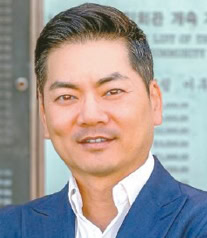
Ahn pointed to the Jewish community’s response to an incident he witnessed last year as an example of what effective political influence can look like.
In December, protesters disrupted a public safety event co-hosted by the Korean American Federation of Los Angeles and the Consulate General of Israel at Wilshire Boulevard Temple.
Within 48 hours of the incident, the Jewish Federation Los Angeles convened an emergency meeting with elected officials from the city, county, state and federal levels. Many officials attended in person to hear concerns and discuss possible support. Most of the politicians at the meeting were not Jewish.
“That experience showed me what real political power looks like,” Ahn said.
Korean American Political Power Goes Beyond Representation
Ahn said a community’s political strength should not be judged solely by the number of politicians who share its ethnic background.
He also urged Korean American voters to rethink how they evaluate candidates and elected officials. Rather than focusing on politicians who visit Koreatown only during election season, voters should consider whether those officials will maintain relationships with the community after taking office and continue listening to its concerns.
“When an important issue arises, we need to ask whether that politician will take our call and seriously listen to our concerns,” Ahn said. “We also need to determine whether that person will help create opportunities for the Korean American community to have meaningful influence at the policymaking table.”
Ahn said the community should broaden its approach beyond simply trying to elect one more Korean American politician.
Elected officials serve for limited terms, he noted, while strong community institutions and well-developed leaders can remain in place for decades and carry their influence into future generations.
Building Alliances Beyond Koreatown
Ahn also stressed that relationships with other communities should not be pursued only when Korean Americans need assistance.
“We cannot build sustainable influence if we stay within Koreatown or communicate only among ourselves,” Ahn said.
The size of a community alone does not determine the strength of its voice, he added. What matters more is how effectively it organizes, how consistently its members participate in civic and political affairs, and how much it invests in future generations.
For Ahn, building Korean American political power ultimately means developing lasting institutions and relationships that can endure regardless of who holds elected office.