Korean Sound Engineer Helps Shape ‘Spider-Man: Brand New Day’ Score
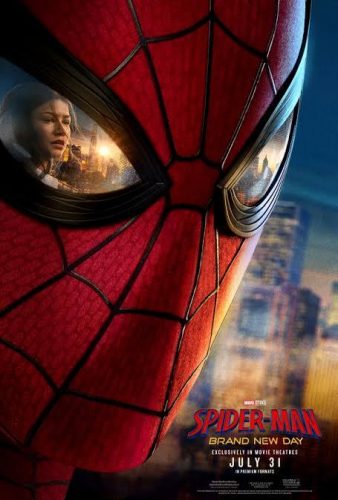
Korean sound engineer Jeongwoo Park helped bring the music of “Spider-Man: Brand New Day” to life, working behind the scenes on the score of the blockbuster film that has surpassed $2 billion at the global box office.
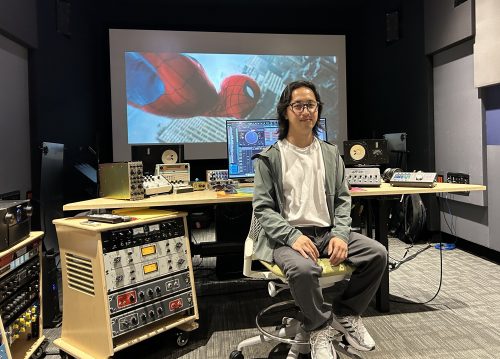
Park, 33, spent the past three months working alongside Warren Brown, a veteran widely respected in Hollywood film scoring. Park was the only Korean sound engineer on the film’s score mixing team.
When The Korea Daily met Park at Fox Studios in Century City studio on Aug. 14, he reflected on the intense three-month process of helping shape the film’s score.
“It was sometime in May,” Park recalled. “Until the day before, I had absolutely no advance notice that I’d be starting on Spider-Man the next day. But the next day, I came back from lunch and saw a face on my screen that was impossible to mistake. It was a rough cut of the upcoming Spider-Man trailer.”
The moment he saw Spider-Man on the screen, his heart began racing.
Korean Sound Engineer Behind Hundreds of Audio Tracks
Park joined the project assisting Brown, a veteran score mixer who also worked on “Spider-Man: No Way Home” and has collaborated with composer Michael Giacchino on numerous major productions.
Park described score mixing as the process of bringing countless individual sounds together into a cohesive and pleasing musical ensemble.
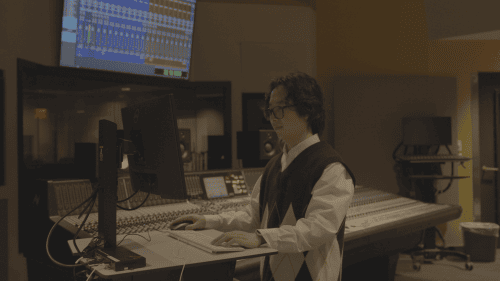
His role required him to manage hundreds of incoming audio files while keeping pace with a project that could change by the minute or even the second. He also maintained the studio’s technical and operational environment so Brown could concentrate entirely on musical decisions.
The workload became especially demanding as the film approached its release, with late nights becoming routine in the final weeks. For Park, however, the experience also revealed the intensity and commitment behind major Hollywood productions.
“Recording an orchestra doesn’t mean the film music you hear in a theater is immediately finished,” Park said. “Usually, dozens of microphones are recording at the same time. Score mixing is the process of adjusting the volume, tone, sense of space, and the left-right and front-back positioning of all those sounds to create one cohesive piece of music.”
For film sound engineers, there is another fundamental rule: No matter how good the music is, it should never disrupt the audience’s cinematic experience.
That requires an especially delicate approach, Park said, so that the score blends naturally into what viewers see on screen.
A Career Path Park Never Expected
Park did not originally dream of working in Hollywood.
His direction changed when he was around 27 and studying theology. He came across an article about Byeong Joon Hwang, a recording engineer who had won two Grammy Awards, and began reconsidering his career.
“I was drawn to the fact that sound engineers work not only with music itself, but also with space and many different kinds of sound,” Park said. “I spent two years preparing for a drum audition and eventually enrolled at Berklee College of Music.”
Park later participated in recording music featured in the Netflix drama “Tastefully Yours.” He was also selected for a Warner Bros. Studios program, where he gained experience working with Alan Meyerson.
Meyerson is one of Hollywood’s leading score mixers and has collaborated extensively with Hans Zimmer on films including “Dune” and “Dunkirk.”
After graduating, Park immediately began pursuing opportunities in Hollywood.
‘People, Trust and Networks’
After leaving Boston for Los Angeles, Park said three factors are just as important as technical ability when trying to establish a career in Hollywood: people, trust and networks.
The barriers to entering the film sound industry are high, he said, in part because major productions depend heavily on professionals who have already earned the confidence of their colleagues.
“In Hollywood, when a project begins, people first ask, ‘Can we really trust this person with something this important?’” Park said.
Technical skills matter, but so do experience and credibility built through years of working with others on set and in studios.
Park said he has rarely encountered another Korean engineer while working in the score mixing field. He hopes his own career can eventually help widen that path for others.
“I want to keep working hard and gaining experience so that young Korean engineers who dream of following the same path can look at what I’ve done and think, ‘There is a way to do this,’” Park said. “I hope I can become one example for them.”
For the Korean sound engineer, contributing to one of Hollywood’s biggest franchises marked both a major professional milestone and another step toward making that path more visible to the next generation.