“Break free from anxiety. The bears may look smart, but the bulls are the ones making money.”
Dan Ives, a star tech analyst at Wedbush Securities, shared this perspective with MoneyLab on October 14 regarding the recent crash of South Korea’s Kospi index. He described the current market as a temporary correction phase, likening it to a moment where the DJ momentarily pauses the music during a structural bull market party driven by the artificial intelligence (AI) revolution.
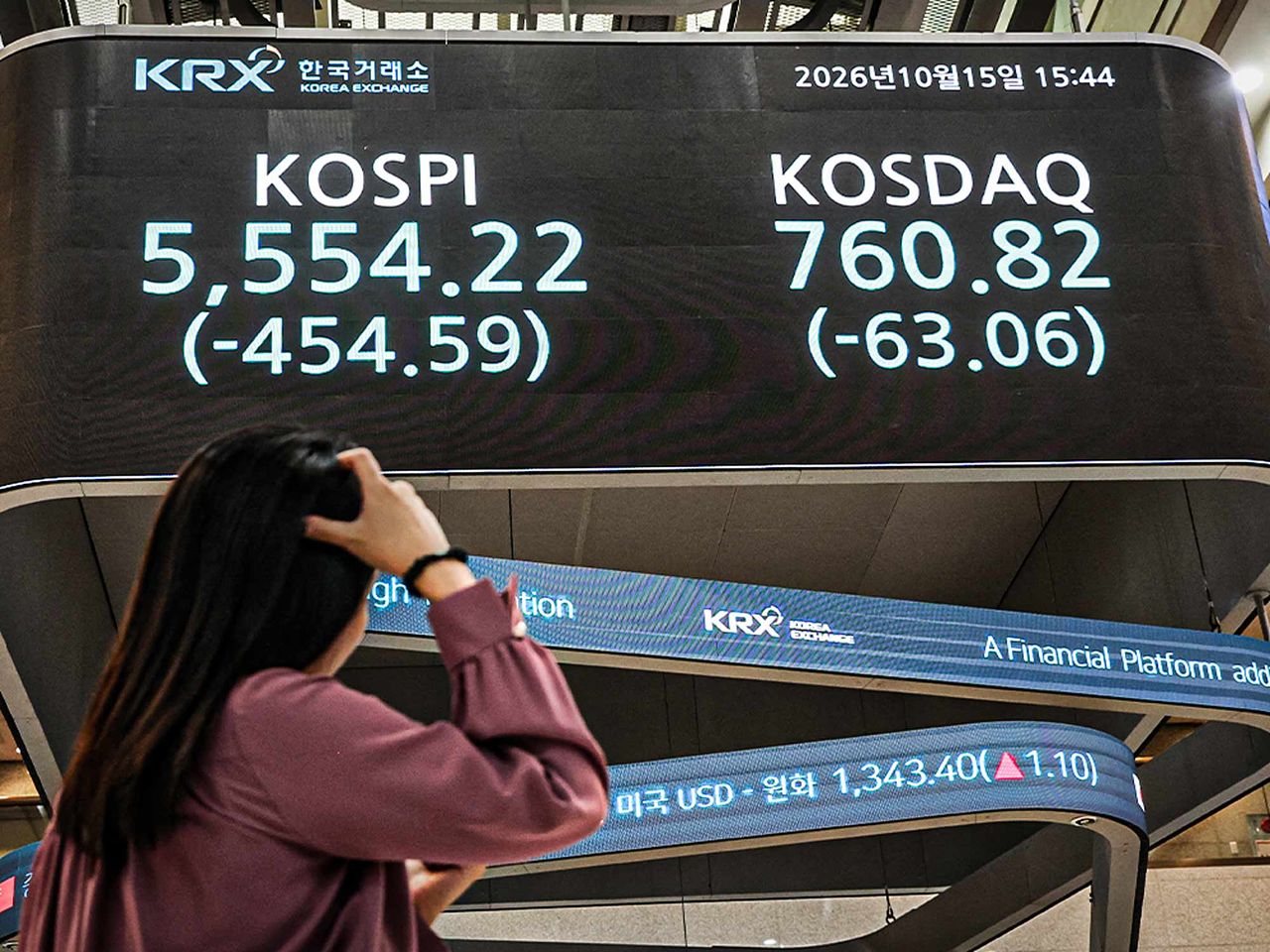
However, Kospi investors remain anxious that such advice might prove to be false hope. Recent domestic stock market conditions have been dominated by fear rather than optimism. In October, the Kospi plummeted by 18.8% in just half a month. This sharp decline followed a period of strong recovery toward the 8000 mark after overcoming the massive 6% to 7% drop from earlier in the year when prices fell nearly 40% from their peaks—marking a sudden return of a crash in less than three months.
Unlike the volatile roller-coaster market in July, which included bouncing recovery phases, the recent crash has trended continuously downward. On October 15, the Kospi fell 7.57% to close at 5554.22, recording its seventh consecutive day of negative returns. This marks the longest losing streak in over two years, since September 3–11, 2024. Consequently, investors worry whether this downturn signals the beginning of a prolonged bear market where the debt-fueled AI castle of sand finally collapses.
Accurate diagnosis and prescription for the current situation are the only ways to overcome the fear of a declining market. This is why MoneyLab urgently consulted 12 investment experts.
The advisory panel includes Jeong-ho Kim, Professor at KAIST; Yong-soo Nam, Head of ETF Division at Korea Investment Management; Geun-chang Noh, CEO of Semiconductor Research Lab; Dan Ives, Senior Managing Director at Wedbush Securities; Dae-gyun Mok, CEO of KCGI Asset Management; Soo-min Park, Head of ETF Strategy at Shinhan Asset Management; Jung-jin Ahn, Head of ETF Consulting at Samsung Asset Management; Han-young Lee, Managing Director at Bogo Fund Asset Management; Yong-taek Jeong, Chief Economist at IBK Securities; Eui-hyun Jeong, Head of ETF Management at Mirae Asset Global Investments; Sang-kyun Han, Chief Investment Officer at Quad Asset Management; and Choon-wook Hong, CEO of Prism Investment Advisory (listed in alphabetical order).
Choon-wook Hong noted that a combination of tangled foreign, institutional, and retail supply-and-demand dynamics, compounded by a bond shock at U.S. AI cloud infrastructure firm CoreWeave, served as the breaking point. Meanwhile, Yong-taek Jeong pointed out that psychological anxiety is the primary driver, noting the lack of prominent buying interest as the market persistently seeks justifications for further declines amid unexpected U.S. inflation data and Chinese semiconductor developments.
Professor Kim Jeong-ho added that while bubbling AI concerns and interest rate hikes remain legitimate risk factors, the fundamental outlook for semiconductors remains solid, projecting continued growth in memory demand, pricing, and profitability over the next two to three years.