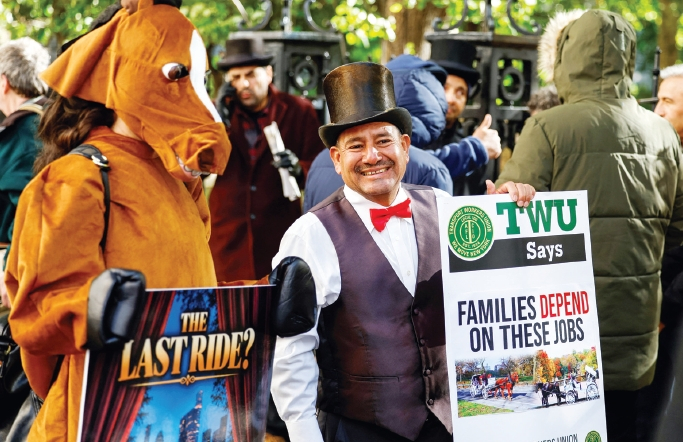
New York City horse carriages will officially be phased out, bringing an end to the historic tourist attraction in Central Park.
The New York City Council held a plenary session and voted to pass the legislation to ban the traditional carriage operations.
Introduced by Council Member Christopher Marte (Democratic-District 1), the Romanchi’s Law bill (Int. 943-A) prohibits the issuance of licenses for tourist carriages, carriage horses, and drivers starting June 1, 2028. Existing licenses will also expire on May 31 of the same year, concluding all carriage operations.
The bill is named after 18-year-old Romanchi Mahajan, who visited New York to celebrate his high school graduation in June and tragically died after falling from a carriage. Central Park carriages had been operating since 1858, but they have continuously faced controversy surrounding animal welfare and safety issues.
President Donald Trump criticized the decision via Truth Social, stating that tourist carriages represent a quintessential New York experience and expressing regret that they are disappearing due to political reasons.
Additionally, the Community Opportunity to Purchase Act (COPA, Int. 905-A) bill, introduced by Council Member Sandy Nurse (Democratic-District 37), was also passed. This legislation grants certified non-profit organizations by the Department of Housing Preservation and Development (HPD) the first right of opportunity to purchase qualifying residential buildings when they are put up for sale.
Building owners must notify HPD and qualified organizations of their intent to sell. The designated organizations are given 20 days to submit an interest in purchasing and 70 days to submit a first purchase offer. A right of first refusal is also granted even if offers from external buyers come in. Building owners can apply for an exemption if they can prove excessive financial hardship.
Furthermore, a bill (Int. 978-B) raising the qualifying income ceiling for the Senior Citizen Rent Increase Exemption (SCRIE) and Disability Rent Increase Exemption (DRIE) programs to $75,000 per year was also passed. Sponsored by Council Member Farah Louis (Democratic-District 45), this ordinance applies retroactively from July 1 of this year.