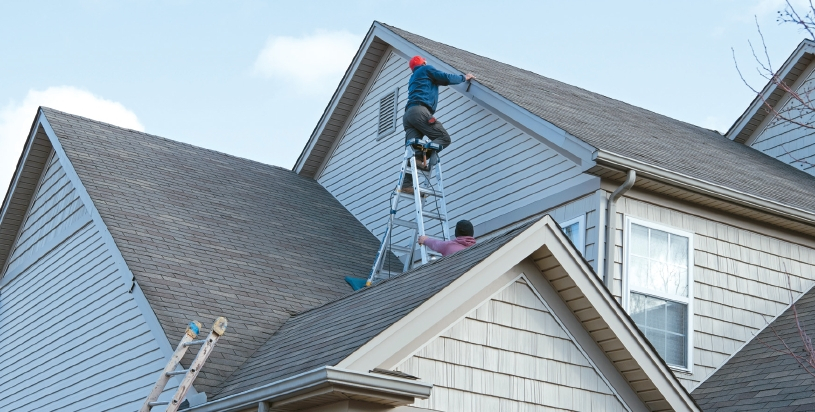
When maintaining a home, the roof is often neglected. Because it is difficult to check and can be costly, many homeowners only take action when water starts leaking through the ceiling or visible damage appears—at which point it is often too late. Regular roof inspection allows homeowners to assess conditions in advance, catch minor damage early, and resolve issues before they escalate into costly repairs.
A roof inspection is similar to a health checkup. A licensed roofing contractor or home inspector visually examines the entire roof, checks physical conditions by hand or with tools to find potential problems, and recommends necessary maintenance and repairs. Generally, attics and gutters are inspected as well.
Most inspections are conducted using a hands-on approach, where the inspector presses on the roof’s surface with hands or tools to closely examine material firmness, water leak traces, and adhesion status. This includes lifting or pressing shingles by hand to verify they are securely fastened and checking whether the underside is damp.
Key inspection points include the condition of roofing materials such as shingles, metal, and tiles; clogging, rust, or leaks in gutters and drainpipes; cracks and adhesion status at eaves, joints, and flashing; leaks and sealing status of vents and skylights; and signs of insulation, ventilation, and water leaks in attics and upper-level ceilings.
For large homes with complex roof structures that are difficult to access, inspectors may utilize thermal imaging devices like infrared scanners, drones, or satellite imagery to conduct precise analyses.
Once the inspection is complete, the contractor provides a detailed report outlining recommended maintenance and repair actions.
Roof inspection costs vary depending on location, contractor, and roof structure. According to Forbes, the average cost is around $220, with a price range spanning from $75 to $600. Because this is a national average, high-cost areas like California tend to have higher price ranges. Using drones or infrared equipment also increases the cost.
Various factors influence the price. Wider roofs require more inspection time, increasing the cost. If the materials are metal or tile, the inspection difficulty increases, which may add extra fees. Steeper roof pitches pose higher safety risks, driving up the price. Seasonal factors also matter; costs rise during the spring and summer peak seasons, while discounts may be available during the off-season.
Some companies issue roof warranties that require regular inspections to maintain coverage, making it essential to verify the terms.
While experts recommend an annual inspection, it can be difficult in practice. However, establishing a consistent schedule—even if the inspection interval is extended to fit your budget—is crucial. First-time inspections can be timed strategically, such as right after a heavy rainstorm, to easily spot leaks, water stains, or damaged shingles.
Experts agree that roof inspections offer value far beyond their cost. Regular checks extend the roof’s lifespan and increase the home’s long-term resale value. The inspection fee is a fraction of the cost required for a full roof replacement. Early detection of minor damage lowers repair bills and provides peace of mind during severe weather events like heavy rain or typhoons.
If inspection costs are a burden, joining a roof maintenance plan with a trusted local contractor is an alternative. These plans are less cumbersome and more affordable than searching for a new company every year.
When booking an inspection, it is recommended to get estimates from at least three licensed contractors and compare them. Because waiting periods can be long depending on the region and season, scheduling ahead is strongly advised.