Critics Say Recycled Promises and Event-Driven Leadership Have Become the Norm
“No Matter Who Wins, Nothing Changes,” Some Members Say
Calls Grow for a Return to the Organization’s Original Mission
Los Angeles Korean American Chamber of Commerce will elect its 50th president on May 19, with the new leader expected to guide the organization for the next year.
The chamber has long been viewed as one of the most influential Korean American business organizations in Southern California. Outside the community, many expect it to represent the voice and interests of Korean American business owners.
But increasingly, both insiders and community observers are asking whether the organization still fulfills that role — or whether it has become more of a networking club serving a limited circle of business insiders.
“Whoever becomes president, it’s basically the same,” is a phrase frequently heard among current and former chamber members. Even past leaders often acknowledge that the one-year presidential term leaves little room for meaningful long-term accomplishments.
As a result, many campaign promises have become repetitive from year to year. Mentorship programs, stronger business partnerships, and expanded networking initiatives repeatedly appear in campaign platforms, only to quietly disappear once terms end.
Several years ago, some candidates even promoted plans involving business expansion into North Korea’s Kaesong Industrial Complex despite obvious geopolitical uncertainty. Those proposals never materialized. Other initiatives, such as mentorship programs connecting younger entrepreneurs with established business leaders, were reduced to occasional networking dinners rather than becoming permanent programs.
A newly joined board member last year described many of the chamber’s official goals as largely symbolic.
“Most people seem to join for the relationships, information sharing, and connections they can access when they need help,” the board member said. “That’s essentially what the membership fee buys.”
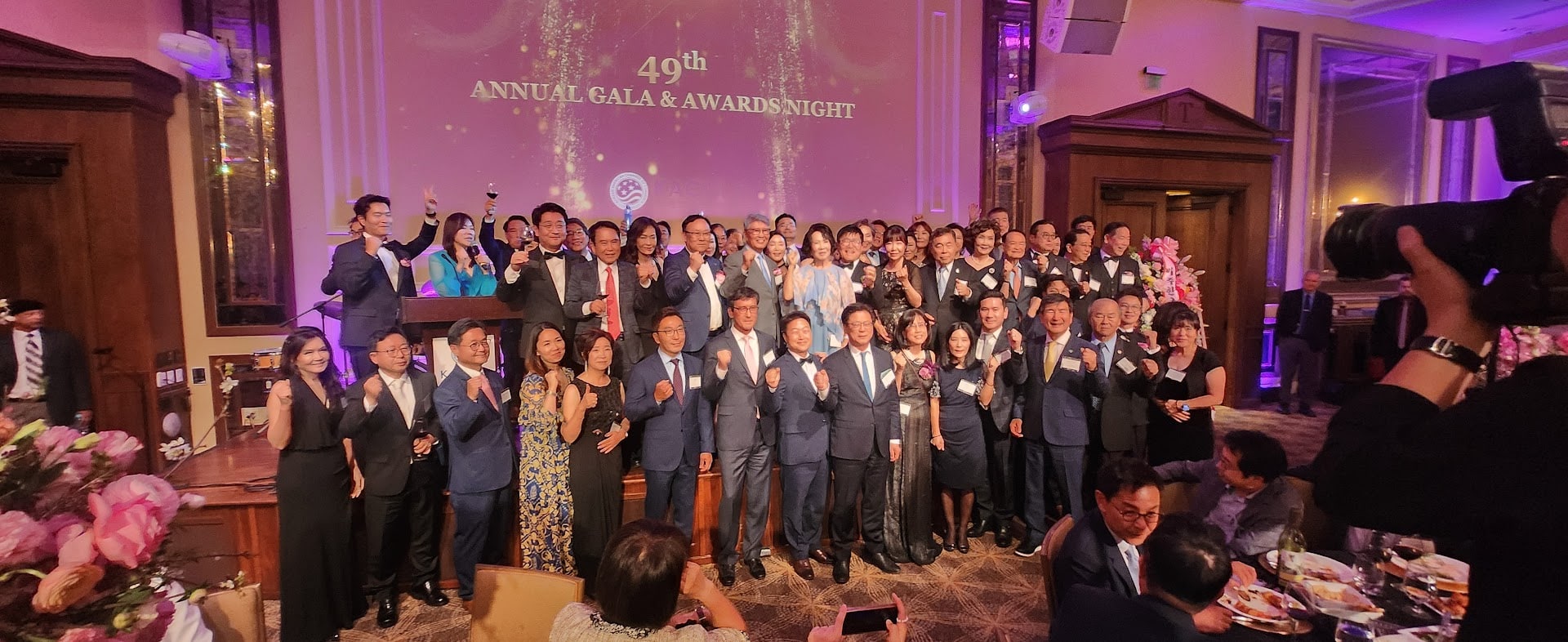
Critics say the chamber’s annual calendar further reflects the organization’s limitations. Once a president is elected, leadership quickly shifts into planning the inauguration ceremony, golf tournaments, mixers, and year-end gala events. By early the following year, attention often turns toward selecting the next president.
The chamber’s gala events have also drawn criticism for focusing heavily on sponsorship sales and awards fundraising rather than broader community impact. While the organization’s stated mission is to strengthen Korean American economic influence and leadership, critics argue the focus has increasingly shifted toward simply maintaining operations and avoiding controversy.
Some former leaders privately describe success in modest terms: organizing several events without major problems or public criticism.
At the same time, chamber culture has largely discouraged consecutive leadership terms. Some board members worry that extended leadership could allow personal influence or internal politics to grow too strong.
The chamber was founded in 1971 by Korean American community leaders determined to protect Korean-owned businesses and strengthen economic opportunities in Koreatown. More than five decades later, however, many believe the organization has drifted far from that original mission.
Even the chamber’s public-facing image reflects concerns about stagnation. The organization’s website still prominently features inauguration content from last year’s president, while its latest public notice dates back several years. Critics say the outdated platform symbolizes an organization that has struggled to remain connected to the broader community it was created to serve.
Community leaders say many Korean Americans still hope the chamber can rediscover its original purpose.
“The community is waiting for the chamber to return to its roots,” one longtime observer said. “What people want now is not another ceremonial event, but leadership that genuinely supports and unites the Korean American business community during difficult times.”