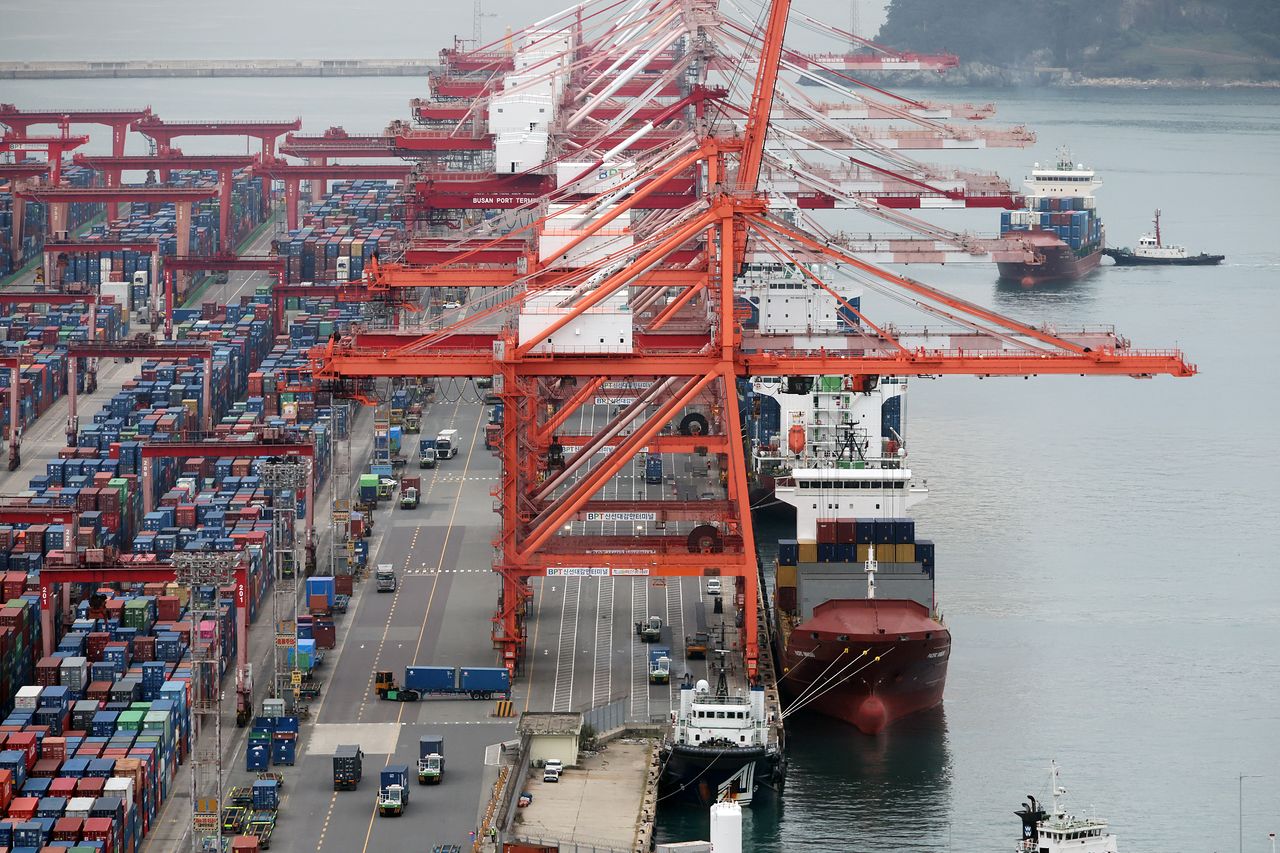
South Korea’s cumulative annual exports have surpassed $900,000,000,000 for the first time in history. Driven by a surge in semiconductor shipments fueled by the rapid expansion of artificial intelligence, achieving the $1 trillion annual export mark this month is all but guaranteed. With this milestone, South Korea is set to become the fourth country in the world to join the exclusive $1 trillion export club, following Germany, the United States, and China.
Surging Semiconductor Demand Drives Record Growth
According to the Ministry of Trade, Industry and Energy’s October export and import trends report, last month’s exports reached $115.28 billion, marking a dramatic 93.7% increase compared to the same month last year. Following September’s $121.1 billion, exports have exceeded the $110 billion mark for two consecutive months, representing the second-largest monthly export volume in history.
Cumulative exports for January through October reached $930 billion, leaving a mere $70 billion remaining to achieve the annual $1 trillion goal. At the current trajectory, crossing the $1 trillion threshold this month is highly likely. Historically, only three nations have achieved annual exports exceeding $1 trillion: Germany and the United States in 2006, and China in 2007. It took China 13 years, Germany 30 years, and the United States 31 years to scale from $100 billion to $1 trillion in exports. South Korea is poised to reach the $1 trillion summit 31 years after first surpassing $100 billion in 1995.
The export boom was undoubtedly led by semiconductors. Last month’s chip exports surged 259.4% year-over-year to $56.44 billion, marking the second-largest scale following September’s record $60.3 billion. This growth was driven by global big tech companies continuing AI infrastructure investments, which simultaneously boosted demand and prices for memory semiconductors. In particular, memory semiconductor exports skyrocketed 360.5% last month to $50.14 billion.
Diversification and Regional Trade Strength
Semiconductors accounted for nearly half of total exports at 49.0%. While the heavy reliance on chips highlights a growing concentration trend, exports of non-semiconductor items also grew by 34% compared to the previous year. Although falling short of the overall export growth rate, 18 out of the top 20 major export items showed upward trends. Computer exports jumped 496.6% to $5.85 billion, supported by expanded AI server infrastructure investments and rising demand for server solid-state drives. Automobile exports also set a new record for October, rising 18.1% to $6.55 billion due to strong hybrid vehicle sales and additional working days.
Cosmetics (57.5%), agricultural and fishery foods (11.6%), and bio-health (30.2%) products also saw synchronized growth, setting record performances for an October. Regionally, exports increased in seven out of the nine major export markets. Exports to China surged 133.6% to $26.98 billion, while shipments to the United States rose 185.8% to $24.9 billion, led by AI-related items like semiconductors and computers. ASEAN exports similarly climbed 128.0% to $21.33 billion.
Imports last month reached $72.78 billion, up 36.0% year-over-year, largely influenced by a 63.1% surge in energy import costs due to high international oil prices amid Middle East tensions. The resulting trade surplus stood at $42.5 billion, marking the second straight month exceeding $40 billion. The cumulative trade surplus for the first ten months of the year reached $294.9 billion, reflecting a robust economic recovery despite global uncertainties.