Would You Ride a Car with No Steering Wheel? The Tesla Cybercab Austin Era Begins
If your idea of a thrill ride involves relinquishing total control to a computer, Elon Musk has a futuristic invitation for you. On Thursday, dozens of shiny, gold-colored Tesla Cybercab Austin vehicles officially took to the streets of Texas without a steering wheel or a brake pedal in sight. Musk hyped up the rollout on X with bold claims of a “Storm of Cybercabs,” signaling a high-stakes bet that everyday passengers will overcome their fear of “no control” rides and step inside.
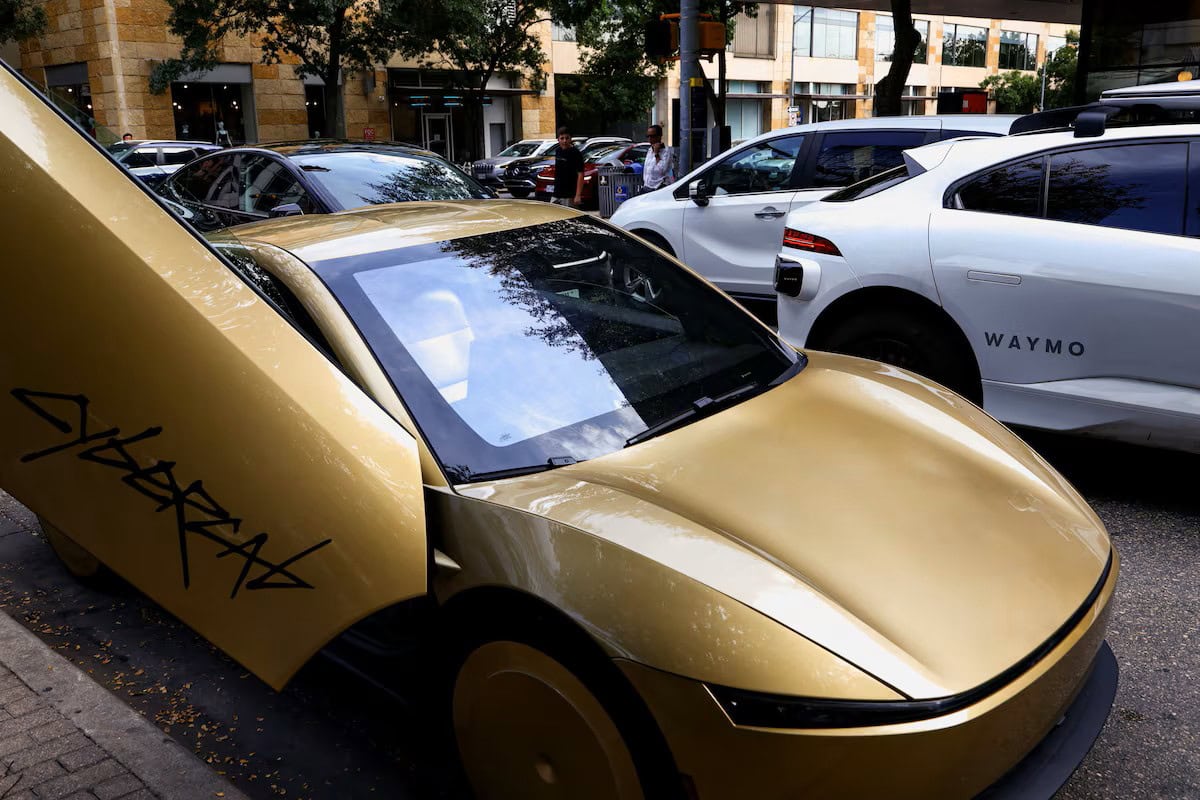
The new two-passenger Cybercab features zero physical controls—meaning no steering wheel, brake, or accelerator pedals—and relies entirely on Tesla’s vision-only camera setup. The driverless service officially kicked off its first real-world deployment on the streets of Austin, Texas.
Camera Tech vs. Public Fear: Can Tesla Outrun Its Competitors
While Wall Street reacted with a quick 5% jump in stock value, the road ahead for the Tesla Cybercab Austin fleet looks far from smooth. Tesla’s camera-only autonomous approach puts it in direct contrast with rivals like Waymo and Amazon’s Zoox, which rely on a combination of cameras, radar, and lidar sensors to map their surroundings. Waymo already operates over 4,000 unsupervised driverless cabs nationwide, while Tesla’s total “unsupervised” fleet sits around a modest 200 units.
Winning the tech war is only half the battle; winning over human psychology is the real hurdle. Recent Pew Research polling reveals a striking 70% of U.S. adults feel uncomfortable riding in a fully driverless car. Add in rising safety skepticism according to Gallup data, and Tesla must prove its vision-only system can navigate low-visibility fog, sun glare, and unpredictable pedestrians without a single human intervention.
Regulatory Speedbumps and the Future of Autonomous Rides
The deployment comes at a critical time for Tesla, following two consecutive years of declining vehicle sales and increased pressure from international competitors like China’s BYD. Musk ultimately envisions a network where millions of Tesla owners convert their personal vehicles into money-making robotaxis. However, regulatory scrutiny remains intense. U.S. authorities are actively probing past collisions and software compliance issues, while European regulators have yet to approve partial self-driving features for general driver use.
Whether the Tesla Cybercab Austin experiment becomes the standard for modern urban transport or stays a quirky Texas novelty depends on one simple factor: whether riders are ready to let go of the wheel for good.
Ready to trade your driver’s license for a backseat view? Keep your eyes on the road (or let Tesla do it for you) as this autonomous saga unfolds!