The Rolling Debt Snowball: Underwater Car Loans Push Monthly Payments to Record Highs
American car buyers are tumbling into a dangerous financial trap. A surging number of consumers are trading in vehicles that are worth far less than their remaining auto loans—a scenario known in the industry as being “underwater” or holding negative equity.
According to second-quarter transaction data from car shopping site Edmunds, nearly 30% (29.6%) of buyers trading in a vehicle for a new car were carrying negative equity on their trade-in. While down slightly from Q1 (30.9%), this marks the highest Q2 figure since the early pandemic days of 2020.
Even worse, the size of that unpaid balance is reaching unprecedented territory. The average debt rolled over on an underwater car loan reached $6,884 during Q2—the highest second-quarter figure on record.
$944 a Month: The True Cost of Rolling Debt
Tacking thousands of dollars in old car debt onto a brand-new auto loan is driving monthly car payments into uncharted waters.
For buyers rolling over an underwater car loan, the average monthly payment hit a staggering $944 in Q2—an all-time record for Edmunds. That is $167 higher per month (a 21% jump) than the average new-car buyer’s monthly installment of $777.
The Cost of Rolling Over Debt in Q2
-
Trade-Ins Underwater: 29.6% of new car buyers
-
Average Negative Equity: $6,884
-
Average Monthly Payment: $944 vs. $777 industry average
-
Lifetime Loan Interest: $16,270 vs. $9,811 standard buyer average
High interest rates compound the problem. Over the life of their new loan, buyers carrying negative equity are projected to pay $16,270 in total interest—about $6,500 (66%) more than standard buyers.
“Buyers who financed at 2022’s peak prices are coming back to trade in, bringing thousands of dollars in old debt with them,” said Jessica Caldwell, head of insights at Edmunds. “Rolling that debt into a new loan swells the principal, and stretching terms to lower the monthly bill only multiplies interest costs long-term.”
Even Resale Champions Aren’t Immune
Depreciation hits every vehicle, but the vehicles carrying the largest dollar deficits were full-sized pickup trucks—models traditionally praised for holding their value.
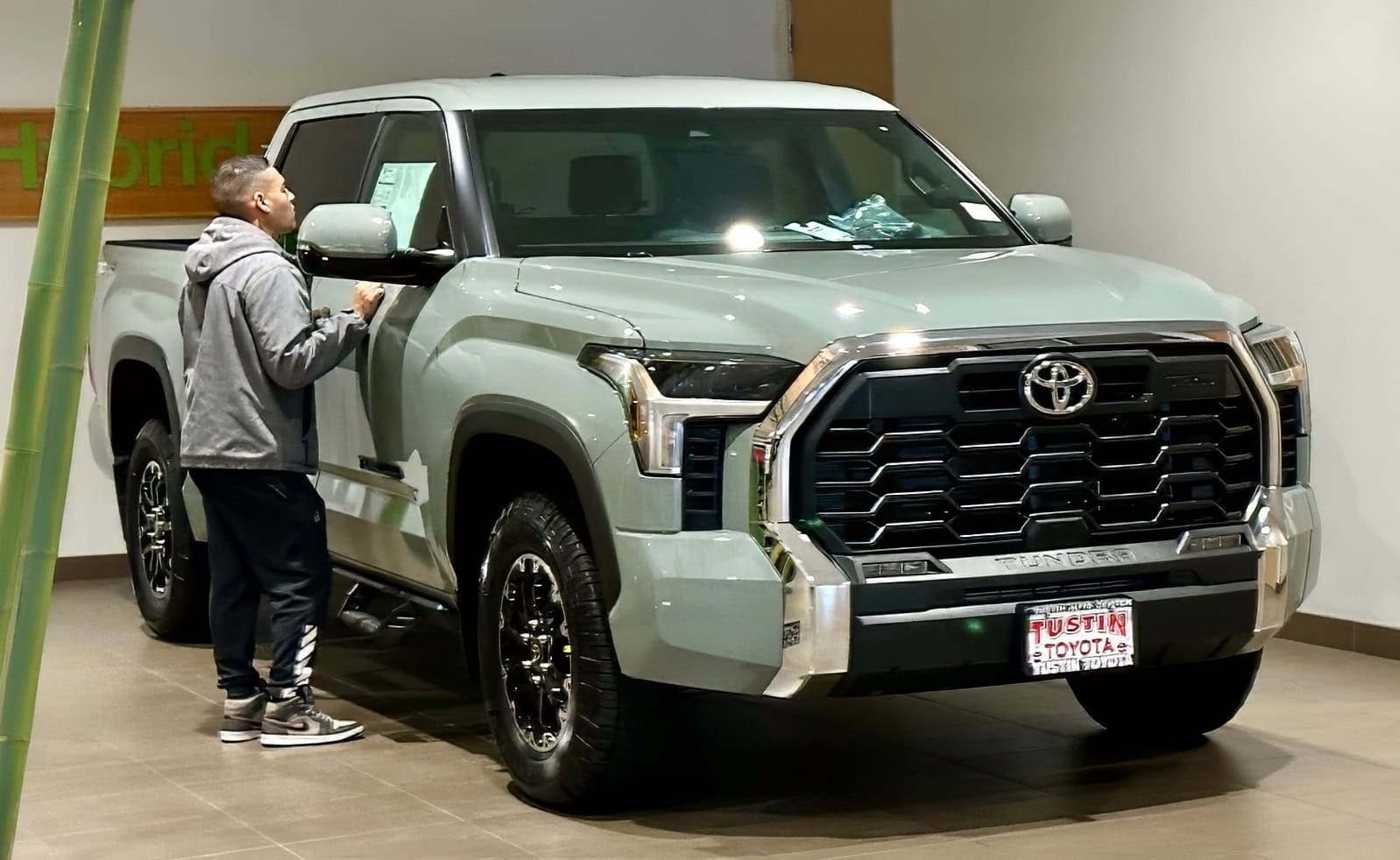
Leading the negative equity pack was the Toyota Tundra, with an average trade-in deficit of $8,929. It was followed closely by the GMC Sierra 1500 ($8,568), Chevrolet Silverado 1500 ($8,516), and Ford F-150 ($8,417).
Popular sedans and compact crossovers were also caught in the dragnet:
-
Jeep Wrangler: -$7,867 average equity
-
Nissan Rogue: -$7,260
-
Toyota Camry: -$7,030
-
Toyota RAV4: -$6,815
-
Hyundai Tucson: -$5,532
-
Kia Sportage: -$5,568
Avoid the Debt Trap
If you are stuck with an underwater car loan, financial experts strongly advise against trading it in for another vehicle. The smartest play is to keep driving your current vehicle while making extra principal payments to erase the balance before stepping onto a dealership lot again.