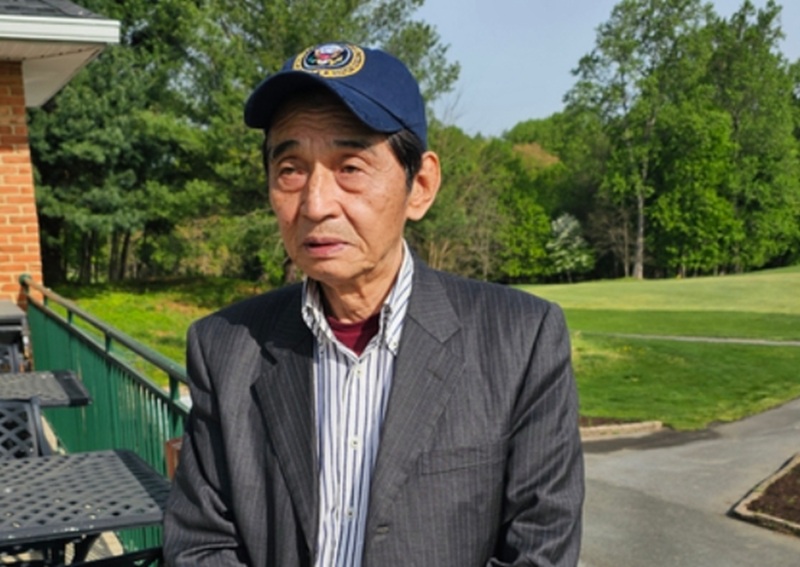
Yang Chang-soo, 79, vividly remembers the moment his life changed forever. Misled by pro-Pyongyang propaganda in Japan, he left with his family for North Korea in 1960 as part of a mass repatriation campaign. It would take him more than six decades—and a perilous escape across the border—to find freedom.
In an interview held during a North Korean defector sports event in Washington, D.C., on April 26, Yang—now head of the Union of North Korean Defectors from Japan—shared his harrowing experience.
The following is an edited excerpt from the interview.
-Why did your family decide to leave Japan for North Korea?
“In 1960, I was a high school student when my parents were deceived by officials of Chongryon, the pro-North Korean association in Japan. They promised free education and even opportunities to study abroad. Dreaming of a better life, we believed them. My parents, five siblings, and I—seven in total—arrived in Chongjin.”
-What was life like after arrival?
“We were relocated to the Haedong area of Chongjin, where we were forced to work in coal mines. The conditions were brutal. We felt deeply betrayed, but there was no way back. I graduated from a technical high school and was also sent to the mines.”
-How would you describe the work in the mines?
“To receive 800 grams of food per day, I had to descend 1,800 meters underground and mine coal. It was hell. Every day was a struggle for survival.”
-Did your background as a repatriate affect your personal life?
“When I tried to marry a North Korean woman at 27, her family strongly opposed it. They saw me as a surveillance risk simply because I was from Japan. Despite their resistance, we had a modest wedding and raised three children—two sons and a daughter.”
-What pushed you to defect?
“Living in North Korea was unbearable. I eventually told my wife and children that I had to escape. I couldn’t endure it any longer.”
-How did you escape, and how did you reach Japan?
“In 2006, I crossed the Tumen River into Yanji, Jilin Province in China. Unfortunately, I was arrested by Chinese authorities and detained for two months. My brother in Japan paid 300,000 yen to secure my release. I then spent four months at the Japanese consulate in Shenyang before finally arriving in Japan.”
-What happened to your family in North Korea?
“We had to part without knowing when or if we’d see each other again. I can only hope for peaceful reunification.”
-What is your view on North Korea’s unification policy?
“The regimes of Kim Il Sung, Kim Jong-il, and Kim Jong-un have never considered peaceful unification. Their goal has always been military conquest and red unification. Hoping otherwise is futile.”
-What are your plans going forward?
“I will continue fighting for the peaceful unification of the Korean Peninsula. I’m also committed to campaigns for the abolition of North Korea’s nuclear weapons and the dismantling of its political prison camps. I will do this work until my last breath.”
BY SUNGHAN KIM [saiseiko.ks@gmail.com]