Korean Americans are raising funds to support the reopening of the Yu Kil-Chun Korean Art Gallery at the Peabody Essex Museum in Salem, Massachusetts.
Established in 1799, the museum is one of the oldest in the country. The gallery is scheduled to reopen on May 17.
Sunghyun Jeon, director of the New England Korean Association, said, “An immediate $200,000 is needed to reopen the Yu Kil-Chun Gallery, which has been closed since 2012 due to expansion and construction.”
If the $200,000 is not secured, the scale of the exhibition will have to be reduced.
Director Jeon said, “A ‘Korean American Association for Peabody Essex Museum Support’ has been formed, led by Korean American organizations in the Boston area, including the Korean American Federation, the Korean American Senior Association, the Civil Society Association, and the Korean American Art Association. Established late last year, the association is currently planning various fundraising events, such as a fundraising gala.”
The challenge, however, goes beyond the funds required for reopening—an additional $3.4 million is needed to sustain the Korean gallery in the long term.
Curator Kim said, “The reopening aims to showcase both the past and present of Korean art,” adding, “We need to acquire modern Korean art pieces for this purpose, but the budget is insufficient.”
As a nonprofit institution, the Peabody Essex Museum relies on donations for operations, making it difficult to secure the necessary funds all at once.
Sue Kim, the museum’s Chief Philanthropy Officer (CPO), stated, “An additional $400,000 is required to purchase more contemporary Korean art pieces.” She further explained, “To convert Curator Kim, who is currently contracted through the National Museum of Korea’s budget, into a full-time curator for our museum, an additional $3 million is necessary.” She emphasized, “Curator Kim is essential for strengthening the Korean art gallery’s content.”
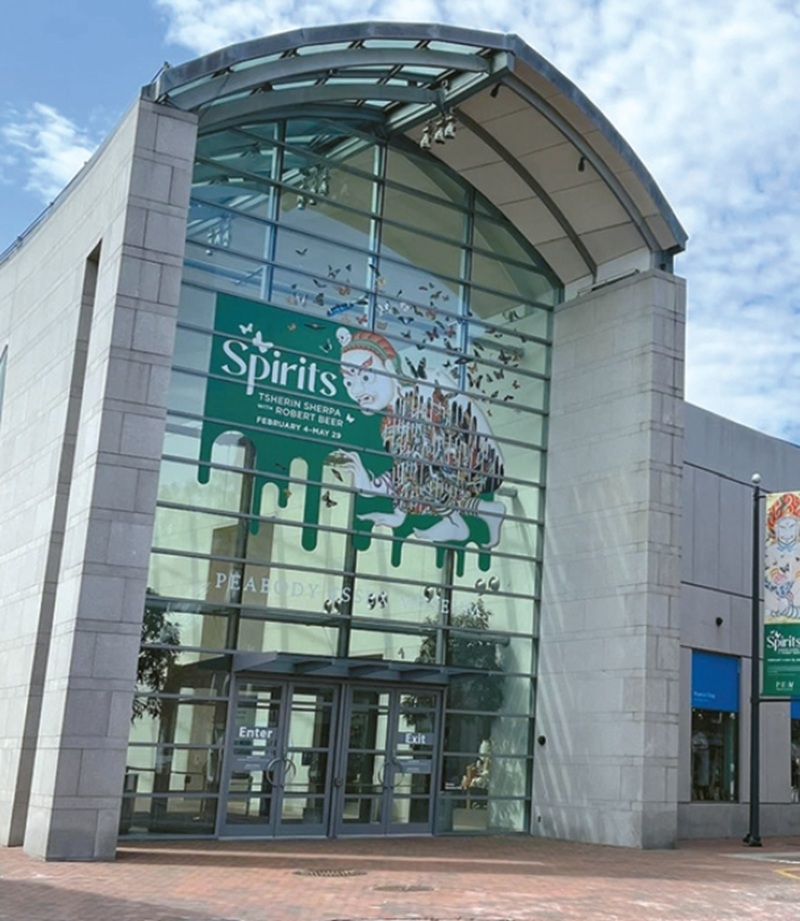
The Yu Kil-Chun Gallery, which opened in 2003 at the Peabody Essex Museum, is named after Yu Kil-Chun (1856–1914), the first Korean international student to come to the U.S. under King Gojong’s orders in 1883.
Yu settled in Salem as part of the Korean delegation to the U.S., known as the Bobingsa (Special Envoy to America) mission. During that time, the museum’s director, Edward Sylvester Morse, collaborated with Yu to collect Korean artifacts, making it the first museum in the U.S. to do so. To honor Yu’s contributions, the museum named the gallery after him.
CPO Kim expressed gratitude for the Korean American community’s fundraising efforts, saying, “In a situation where additional budget allocation is difficult, it is heartening to see the Korean American community take ownership and lead these activities. Korean Americans in New York and Atlanta have also joined the fundraising efforts, and we have even received offers of support from South Korea.”
Curator Kim explained that if the Yu Kil-Chun Gallery secures the necessary funds and reopens as planned, it will become the largest Korean art gallery in the Eastern U.S.
“We plan to permanently exhibit over 100 Korean artifacts,” she said, highlighting the Pyongan Provincial Governor Welcoming Ceremony with Scholars Who Passed the State Exam (Pyeongan Gamsado Gwagup Jejahwanyeongdo) as a notable piece. “The conservation of this work was carried out by the Leeum Museum of Art in South Korea,” she added.
Meanwhile, the Peabody Essex Museum attracts over 250,000 visitors annually and houses a collection of approximately 2,000 Korean artifacts.
BY KYEONGJUN KIM [kim.kyeongjun1@koreadaily.com]