The United States is seeing a shortage of 1-cent coins after President Donald Trump halted penny production earlier this year due to high minting costs. Pennies are disappearing from circulation, complicating cash transactions in stores across the country.
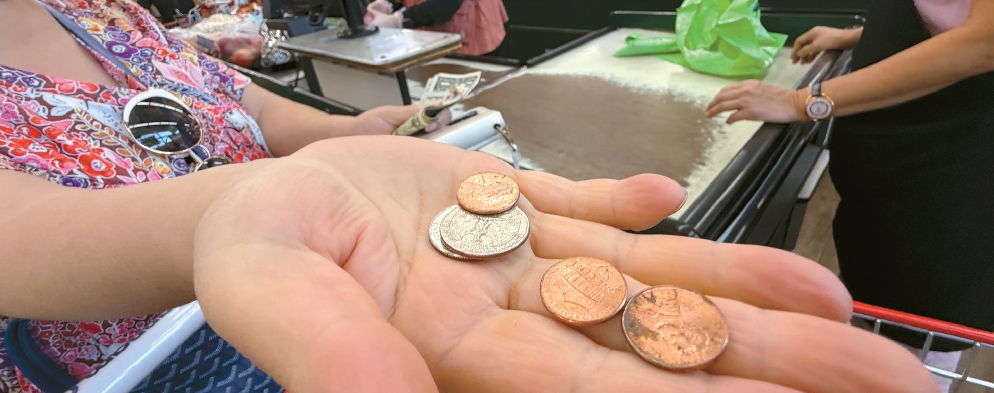
At a McDonald’s branch, Jungjun Kim said he was told by a cashier that no change was available when he paid $1.10 for a coffee costing $1.08 with tax. “They said they couldn’t give me my 2 cents back because they didn’t have any pennies,” Kim said.
The shortage is also affecting the banking system. Roughly one-third of the Federal Reserve’s 170 coin distribution centers have suspended penny deposits and withdrawals, deepening the imbalance in circulation.
According to Jungchill Kim, president of the Korean American Grocers Association of California (KAGRO), “Prices will need to be set in 5-cent increments instead of single cents. If an item costs 23 cents and is lowered to 20 cents, the owner loses money; if raised to 25 cents, customers will complain.” He added that low-income customers and cash-based businesses could experience greater inconvenience.
A representative from Hannam Chain in Los Angeles said businesses with a high share of cash transactions may need to adjust prices according to new rounding policies, adding, “We have to avoid situations where customers pay cash but can’t receive their change.”
KTLA reported on the 31st of last month that major retailers such as McDonald’s are struggling with the penny shortage. McDonald’s stated that it is working with the federal government to develop a “fair and simple” solution as some locations face difficulty providing exact change.
Different convenience chains are responding in their own ways. Love’s and Kwik Trip are rounding cash totals down to the nearest 5 cents, while Sheetz launched a campaign offering free drinks to customers who bring in 100 pennies.
In Koreatown, Doris Kim, owner of an ice cream shop, said the impact has been limited so far because most customers pay by card. However, she warned that “businesses with many cash customers could face more problems later.”
The lack of clear federal guidance has added to the confusion. USA Today reported that in some states, rounding cash transactions is legally prohibited, forcing many stores to absorb the cost. In response, Congress introduced the Common Cents Act in April, proposing that cash prices be adjusted in 5-cent increments nationwide.
The U.S. Treasury Department confirmed that it placed its final order for copper-zinc blanks in May and officially ended penny production in June. Coins distributed by August are expected to be the last batches in circulation.
BY HANKIL KANG [kang.hankil@koreadaily.com]