Yong Yang Shooting Case Protest Demands LAPD Accountability
Yong Yang Shooting Case remains unresolved two years after a mentally ill Korean American man was fatally shot by Los Angeles police officers during a welfare response requested by his own family.
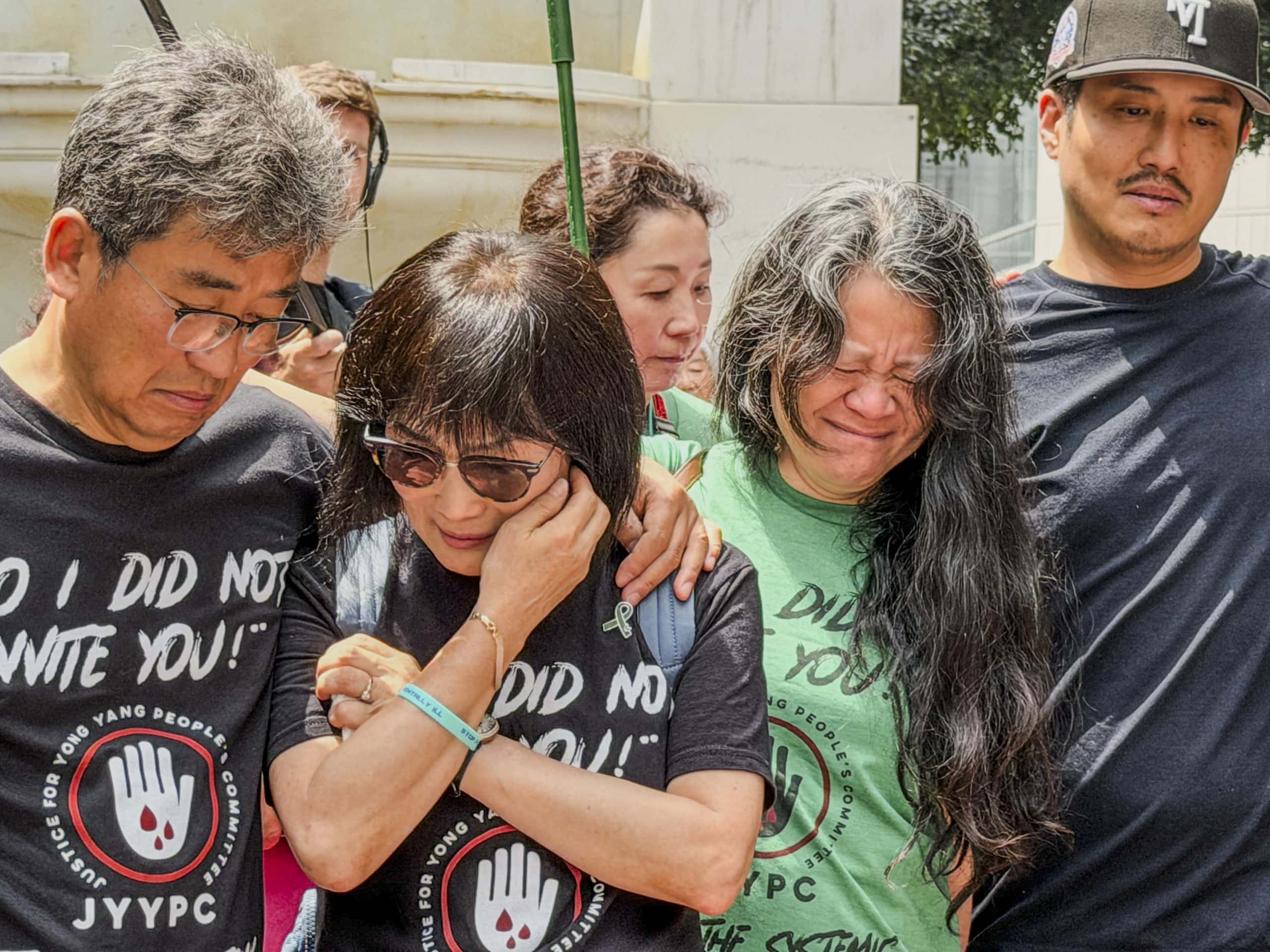
Family members, victims of police violence, and civil rights groups gathered outside the federal courthouse in Los Angeles on May 2 for a memorial rally marking the second anniversary of Yong Yang’s death. Protesters demanded accountability, transparency, and structural reforms in police responses to mental health crises.
Yin Yang, the victim’s twin brother, described the incident as “murder” and said justice would only be served “when the officer who killed my brother goes to prison.”
Family Says Police Escalated Mental Health Crisis
Min Yang, the victim’s father, said the family had originally contacted the Los Angeles County Department of Mental Health (DMH) seeking medical assistance for his son.
“Exactly two years ago, we asked DMH for help, but after a 20-second conversation they called 911,” Yang said. “At 11:58 a.m., my son was shot three times within 1.19 seconds.”
He also criticized the Los Angeles Police Department for what he described as an unnecessarily aggressive response.
“The officers spoke with my son for barely one minute in total,” he said. “They forced entry and tried to end the situation too quickly.”
In January, Yang filed a federal lawsuit in California’s Central District Court against LAPD Olympic Division Officer Andres Lopez, Sgt. Araceli Rubalcava, and 10 responding officers involved in the
Attorney Criticizes Police Shooting Culture
Attorney Dale Galipo, who represents the Yang family, argued that police officers rarely face meaningful consequences after fatal shootings.
“If an ordinary citizen shot and killed someone, they would immediately be arrested and prosecuted,” Galipo said. “But in police shootings, prosecutions almost never happen.”
He further alleged that officers involved in shootings are often not disciplined and sometimes even promoted.
“The organizational culture justifies shootings and protects officers,” he said. “In mental health crises, de-escalation is critical, but police did not slow things down or calmly communicate.”
Galipo claimed only about six seconds passed between the door opening and the gunfire.
“It was a completely unnecessary shooting,” he added.
Community Groups Join Yong Yang Shooting Case Rally
Grace Yoo, an attorney and community activist, said the family is seeking broader institutional reform.
“The Yang family wants structural change,” Yoo said. “Police response methods must change.”
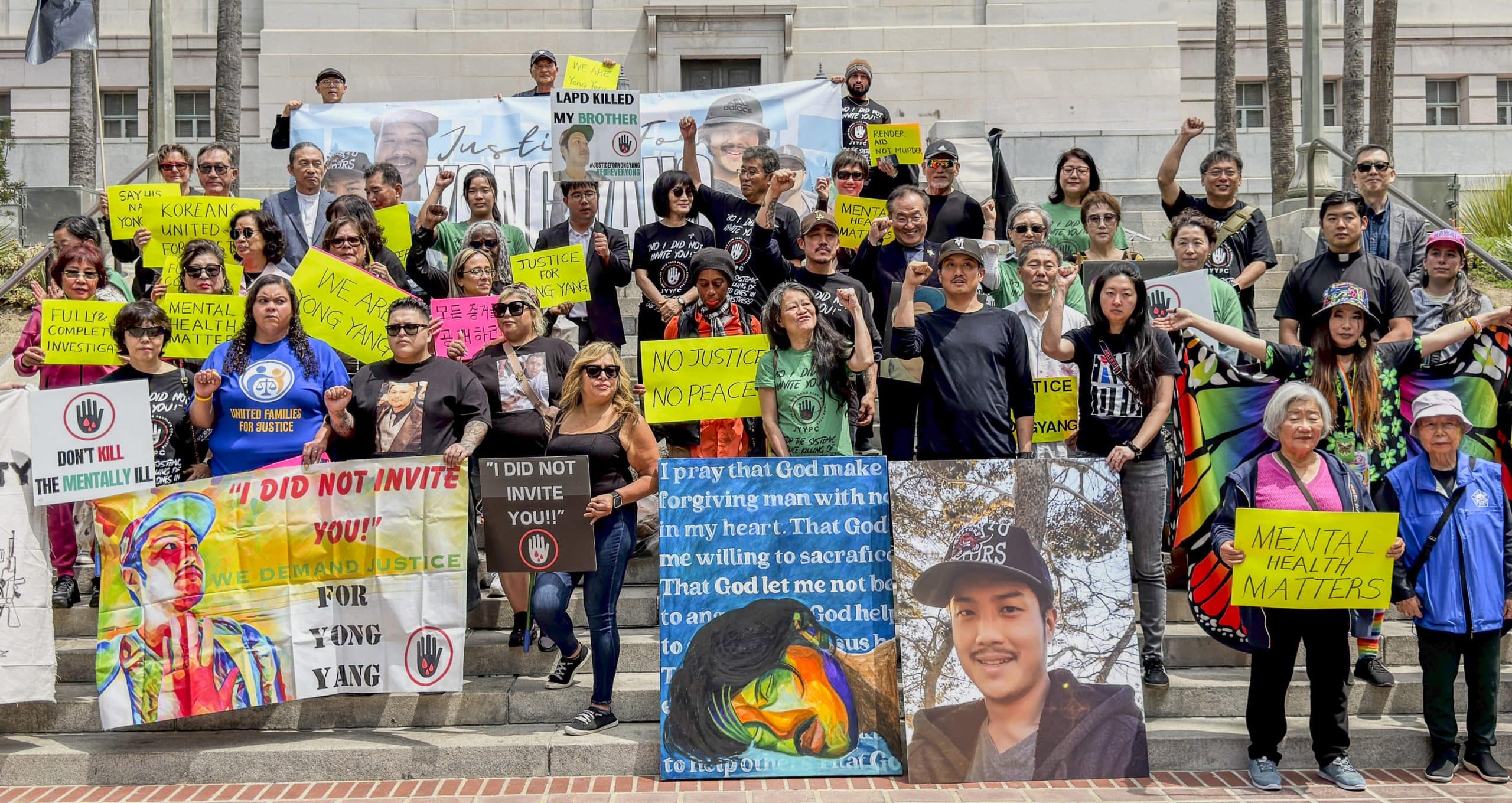
The rally, organized by the Justice for Yong Yang People’s Committee (JYYPC), began at 10 a.m. and drew more than 100 participants, including family members, activists, nonprofit organizations, and media representatives.
Participating organizations included Silicon Valley De-Bug, Boyle Heights-based Centro CSO, Dignity and Power Now, the Korean American Democratic Committee (KADC), and the Kyungwon Lee Leadership Center.
After the rally concluded, demonstrators marched to Los Angeles City Hall chanting, “Make justice happen.”
A representative from Silicon Valley De-Bug said his own son had been fatally shot by San Jose police under similar circumstances 11 years ago.
“It feels like if you have a badge and a gun, you have the freedom to shoot anyone for any reason,” he said.
The first hearing in the federal lawsuit is scheduled for May 8. Attorneys for the family said the case will challenge what they describe as unconstitutional practices and systemic problems within the LAPD.