Why Your Smartwatch Calorie Tracker Might Be Deluding Your Diet Plan
If you’ve ever finished a sweaty gym session, glanced at your wrist, and celebrated burning off a massive slice of pizza, you might want to pause before grabbing that slice. A new scientific study warns that relying blindly on a smartwatch calorie tracker could actually leave you in a calorie surplus—even when you think you’re in a deficit.
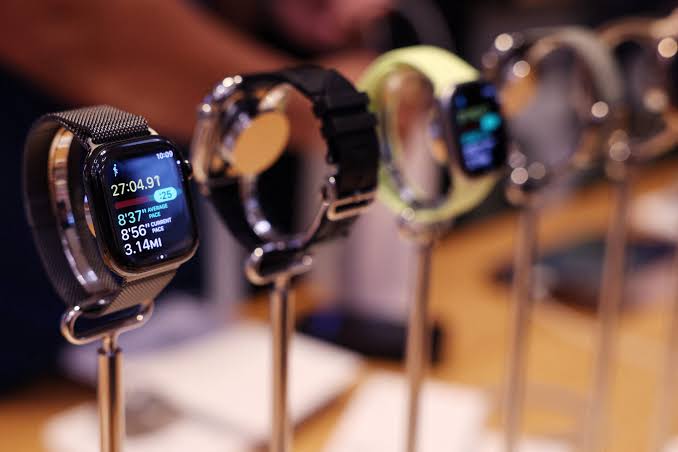
Researchers at Florida International University tested four popular wearables during indoor cycling workouts and found that these devices miscalculate physical activity energy expenditure by 15% to 25% on average compared to medical-grade indirect calorimetry.
How the Top 4 Wearable Brands Performed Under the Microscope
The study put the Apple Watch Series 8, Fitbit Sense 2, Samsung Galaxy Watch 5, and Garmin Forerunner 955 through their paces. The results showed that almost every major smartwatch calorie tracker tends to overestimate how hard you’re actually working:
-
Garmin Forerunner 955: Overestimated energy burn by an average of 68.6 kcal.
-
Samsung Galaxy Watch 5: Overestimated energy burn by an average of 56.8 kcal.
-
Apple Watch Series 8: Overestimated energy burn by an average of 21.6 kcal.
-
Fitbit Sense 2: Showed the smallest average deviation (3.1 kcal after removing outliers), though statistical significance remained variable.
Over the course of a week, these small daily overestimations can stack up to hundreds of unearned calories, completely derailing weight management goals.
The Body Fat Factor: Why High Body Fat Percentage Increases Error
One of the key findings of the research is that individual body composition heavily impacts tracker accuracy. Across all four brands, participants with higher body fat percentages experienced significantly larger error margins—with Fitbit and Garmin showing the steepest accuracy drops as body fat increased.
Why does this happen? Scientists point to potential signal distortions caused by movement artifacts during exercise, alongside how optical sensors penetrate skin and tissue layers. However, because tech companies keep their proprietary algorithms strictly secret, exact calibration fixes remain tricky.
How to Use Your Wearable Wisely Without Sabotaging Your Goals
Does this mean you should toss your fitness tracker in the trash? Not at all. The key is shifting how you interpret the data:
-
Treat calorie numbers as an upper limit: Assume your actual burn is 15-20% lower than what appears on your screen.
-
Focus on heart rate metrics: Track your heart rate zones and active time rather than total calorie metrics for a more reliable indicator of workout intensity.
-
Avoid drastic calorie cutting: Don’t starve yourself to compensate for potential overcounts—your body still needs baseline energy for recovery and vital functions.
Smartwatches remain incredible tools for staying accountable and tracking fitness trends over time. Just remember: when it comes to tracking exact calories, think of your watch as a general guide, not a precise scientific scale!