The Evolution of AI-Generated Games
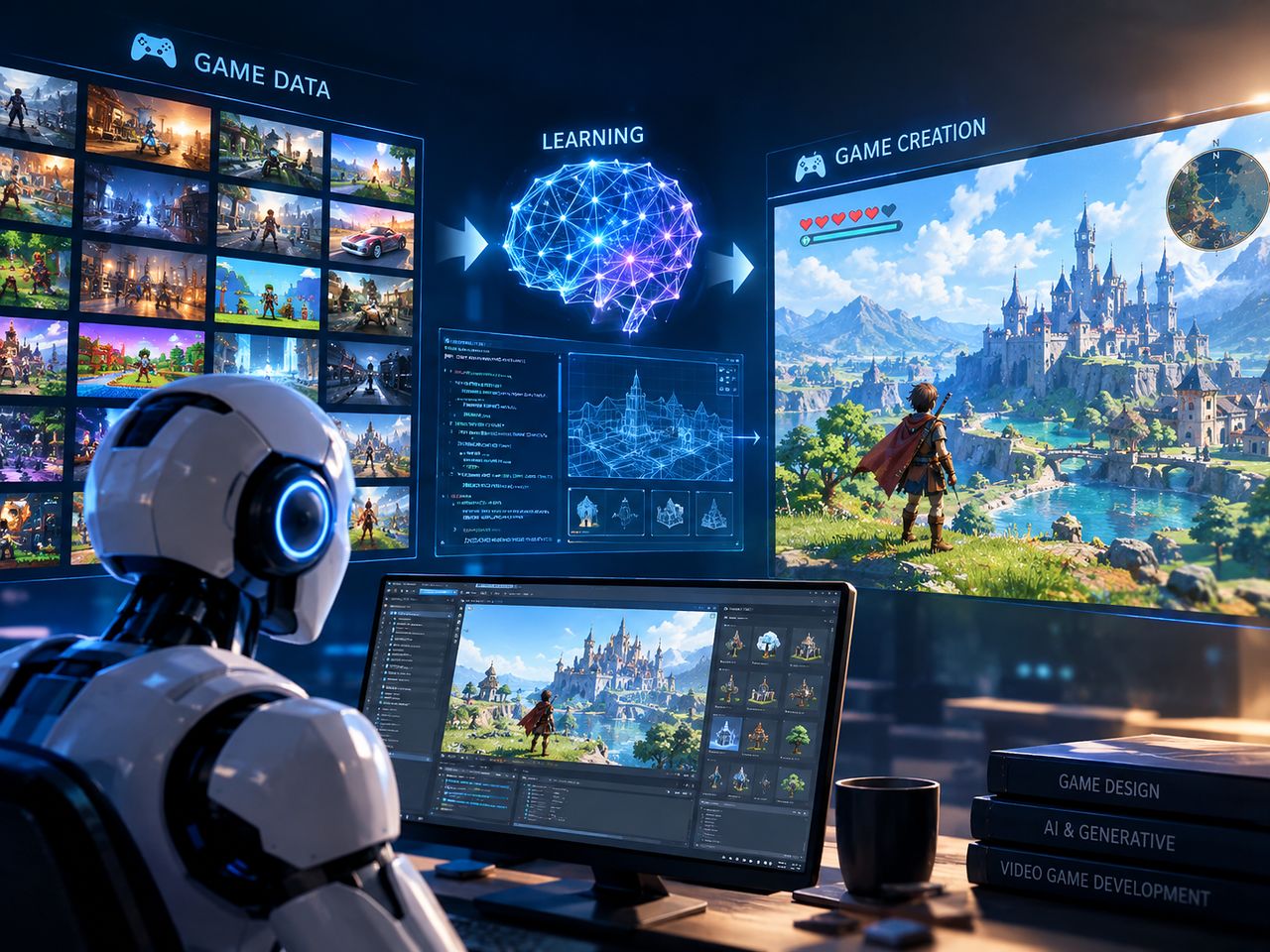
AI-generated games are rapidly transforming the digital landscape as advanced language and media models take over development. Following OpenAI’s release of GPT-6 Astra, a single text prompt can now directly manipulate game development tools to produce fully playable 3D worlds. Game companies report that prototyping times have been cut in half, making the translation of human imagination into interactive environments easier than ever. However, while artificial intelligence is busy creating games, those very same games are quietly teaching the AI.
From Atari Tests to Real-World Classrooms
Historically, platforms like Atari and StarCraft served as controlled testing grounds to measure how well algorithms could perform under strict rules. Today, the objective has shifted from winning matches to bringing virtual lessons into the physical world. While text models have read billions of sentences about physical concepts like dropping a cup, they lack sensory context regarding weight, reach, and momentum. Collecting real-world physical data for robots is slow and expensive, but millions of hours of human gameplay already exist as a massive training dataset. US-based AI firm General Intuition, backed by $450 million in funding, utilizes its Medal service to capture billions of first-person gamer clips complete with precise keyboard and mouse inputs, creating deeply annotated datasets of human problem-solving.
World Models and Autonomous Driving
Google DeepMind has advanced this concept further with Genie, generating interactive 3D environments from single sentences or images. Systems like Genie3 allow researchers to train specialized models like SIMA2 in simulated spaces where the cost of failure is zero. Alphabet’s Waymo leverages similar AI-based world models to safely test autonomous vehicles against rare or dangerous road scenarios, such as sudden weather anomalies or unexpected obstacles. Ultimately, the spatial awareness and decision-making skills that keep autonomous cars and kitchen robots safe are being forged by billions of hours of human gaming activity.