When major blood vessels supplying blood to the heart become narrowed, patients often wonder whether open-heart surgery or a stent procedure is better. A recent large-scale study has revealed that coronary artery disease treatment outcomes show no significant difference in 10-year survival rates between the two methods.
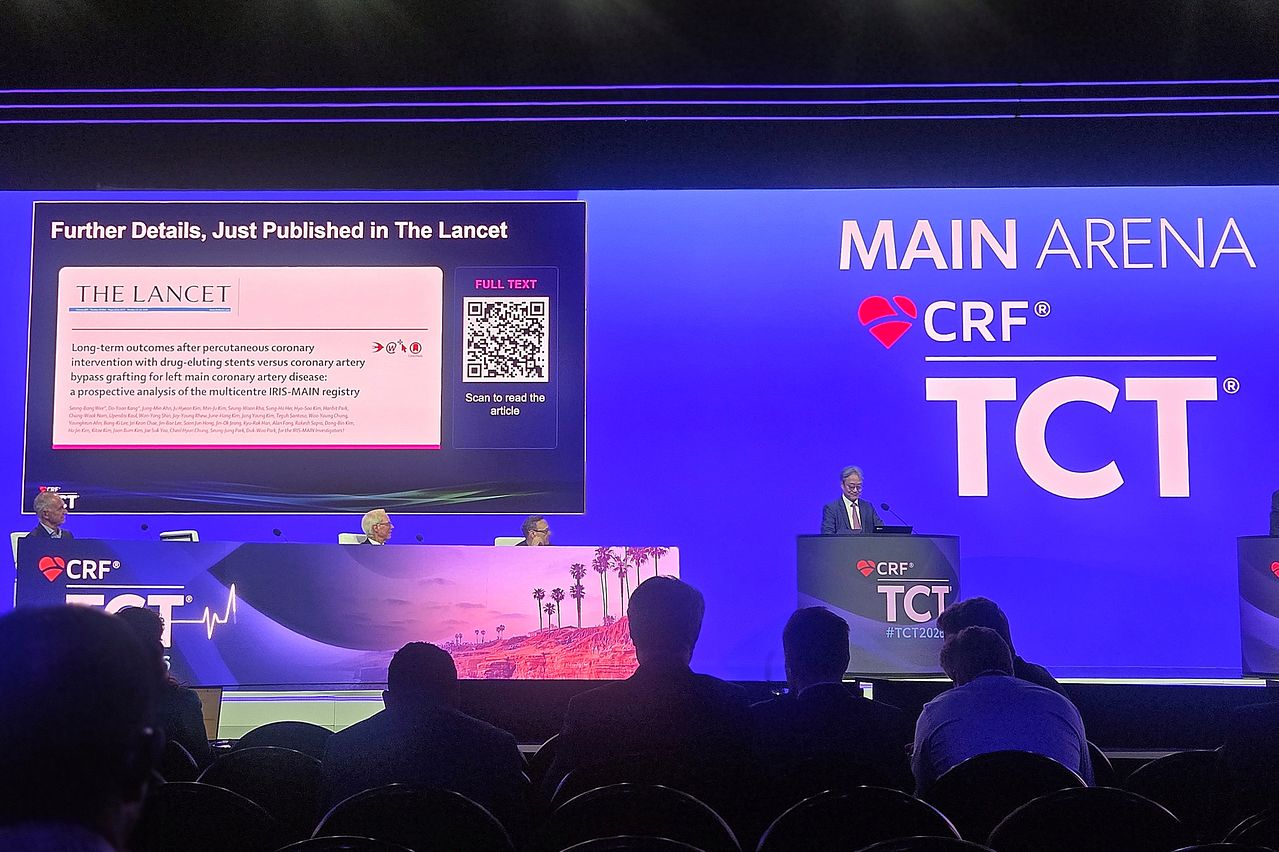
According to Seoul St. Mary’s Hospital on the 5th, a research team led by Professors Park Duk-woo and Park Seung-jung of the Department of Cardiology analyzed 5,379 patients treated across 46 medical institutions in 5 Asian countries, including South Korea, India, and Indonesia. The findings were published in the prestigious medical journal ‘The Lancet.’
The study focused on patients with disease in the ‘left main coronary artery,’ the primary vessel supplying blood to a vast area of the heart muscle. Severe narrowing or blockage in this area can lead to myocardial infarction or cardiac arrest.
The two main treatment methods are coronary artery bypass grafting (CABG) and stent placement. Bypass surgery involves opening the chest and connecting harvested blood vessels to bypass the blockage. Conversely, stent placement involves inserting a thin tube and expanding a metal mesh inside the narrowed vessel, offering a less invasive approach with faster recovery.
While bypass surgery has traditionally been the standard treatment for left main disease, the evolution of stent procedures sparked debates over which method provides better long-term survival. The research team analyzed data from 3,836 patients who underwent stenting and 1,543 who received bypass surgery between 2003 and 2024.
The results showed that the 10-year cumulative mortality rates were 24.0% for the stent group and 22.9% for the bypass surgery group, showing no statistically significant difference.
However, differences emerged regarding complications. The incidence of post-treatment myocardial infarction was higher in the stent group at 4.6% compared to 1.9% in the bypass group. The rate of repeat revascularization was also higher in the stent group at 11.8% versus 4.6%.
Conversely, the stroke rate was twice as high in the bypass group at 6.2%, compared to 3.0% in the stent group. This indicates that while long-term survival rates are similar, the risk profile for specific complications varies depending on the treatment method.
The research team emphasized that patients and doctors must comprehensively consider individual vascular conditions, underlying diseases, and complication risks rather than viewing one treatment as universally superior.