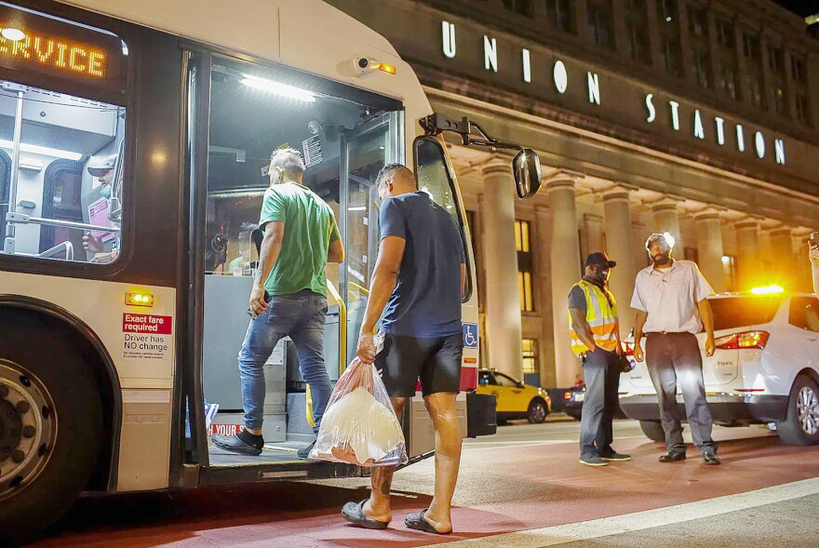
Reports indicate that undocumented Chicago undocumented immigrants with unstable legal statuses are reducing daytime outings and conducting their daily lives at night out of fear of enforcement by Immigration and Customs Enforcement (ICE). According to the Chicago Sun-Times and WBEZ, these individuals have altered their lifestyles by working, grocery shopping, and visiting laundromats after dark, which has led to income loss, sleep deprivation, and psychological stress.
An analysis of ICE arrest data obtained from the Deportation Research Clinic by both outlets revealed that 1,560 people were arrested in Cook County alone from the beginning of the year through the first week of August. Arrests of enforcement targets have also been reported in everyday locations such as courts, schools, and grocery stores.
Even after the official conclusion of the federal immigration enforcement operation ‘Midway Blitz’ in the Chicago area last year, anxiety over crackdowns persists, prompting undocumented individuals to minimize outings and alter their schedules.
Gustavo Dominguez (49) and his wife Patricia Davila (67), who live in Chicago, now do their laundry and grocery shopping at night after witnessing enforcement agents detaining people near their home. Fearing he might cross paths with immigration agents, Dominguez rode an Uber to work for a time and caught a ride home with a coworker. The couple has set aside two months’ worth of rent as emergency funds in case one of them is detained by immigration enforcement and leaves the family struggling financially. Davila waits daily for a text message confirming her husband arrived safely at work.
Some have also changed their activity methods and time slots to maintain their livelihoods. Guillermo Flores (54), who has sold fruit and snacks on the streets for about 16 years, loses income because he takes off a day or more whenever news of a crackdown spreads. He has advanced his grocery-buying time from 7 a.m. to 5 a.m., before sunrise. However, he avoids operating late at night due to concerns about robbery. An increasing number of individuals are also volunteering for night care jobs out of concern for identity exposure and immigration crackdowns.
Anxiety over enforcement is also impacting health and social lives. Some avoid going out, thereby delaying preventive care or resorting to telehealth and mail-order prescriptions. Cases have been reported where individuals sleep only two or three hours because they care for their children after working night shifts. Rosemary Magaña, a therapist with the Illinois Coalition for Immigrant Mental Health, pointed out that fewer meetings with friends and neighbors as well as weekend gatherings can weaken social connections that help cope with anxiety. Experts emphasize the need for an environment where these individuals can voice their fears and support one another.