
Reports of Spontaneously Shattering Sunroofs Reach Record Highs in 2026
Federal safety regulators are logging a sharp increase in complaints from drivers reporting that their vehicle sunroofs or moonroofs shattered unexpectedly while driving.
According to reports by The Wall Street Journal and the Daily Mail, the National Highway Traffic Safety Administration (NHTSA) has received nearly 500 complaints regarding shattered sunroofs so far this year. The surge puts 2026 on track to set an all-time annual record for spontaneous glass breakage reports.
NHTSA records show that approximately 2,800 spontaneous sunroof breakage incidents have been logged since 2021. A broader analysis of federal safety data revealed that these incidents span more than 200 vehicle models manufactured by 17 major automotive brands over the past three years.
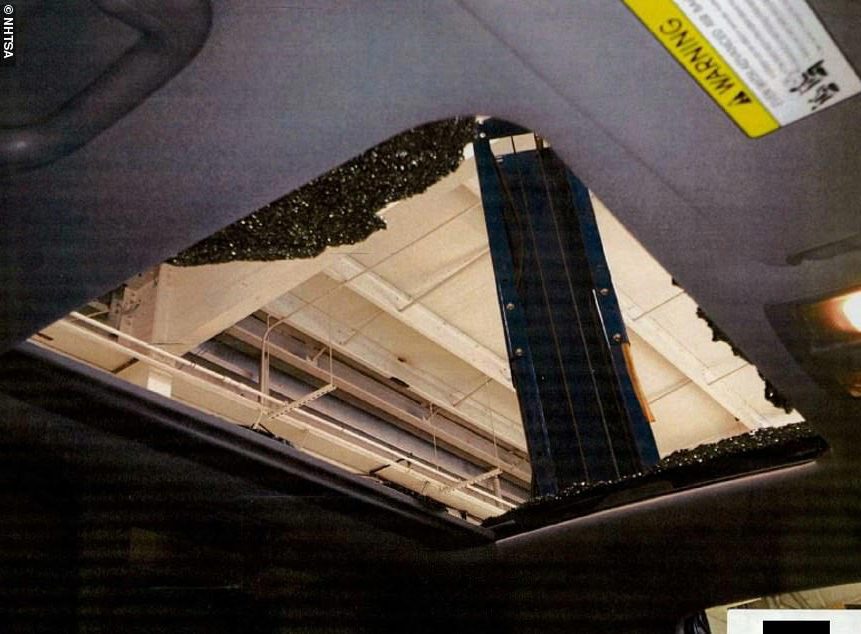
Among the vehicles frequently cited in driver reports are several high-demand models, including the Toyota RAV4, Hyundai Palisade, Kia Telluride, and Honda CR-V.
Drivers repeatedly describe terrifying experiences where glass fractured without warning at highway speeds. In one incident, a GMC SUV’s moonroof shattered, dropping glass fragments directly onto seats designated for children. In another case, a Mercedes-Benz owner reported hearing a loud noise resembling a gunshot immediately before the glass roof collapsed inward.
Regulatory Challenges and Historical Investigations
Despite the growing volume of driver complaints, pinpointing a single definitive cause remains extremely difficult for regulators and engineers. Identifying specific manufacturing or structural design flaws in individual instances continues to pose significant technical hurdles.
Automakers maintain that internal quality audits have failed to identify underlying vehicle defects that would explain the spontaneous glass failures.
NHTSA previously conducted a multi-year investigation into spontaneous sunroof breakages. The inquiry originated in 2013 following a series of complaints involving the Kia Sorento, before expanding into a broader seven-year review covering more than a dozen major vehicle manufacturers and over 4,000 logged complaints.
However, NHTSA officially closed the investigation in 2021, concluding that there was insufficient evidence to prove the existence of a systematic, safety-related defect.
External Triggers and Expanding Glass Surface Area
Regulators and automotive engineers attribute spontaneous shattering to a combination of external factors rather than inherent mechanical failure:
-
Micro-Cracks from Road Debris: Imperceptible chips caused by tiny stones or debris kicked up on highways.
-
Thermal Stress: Rapid ambient temperature fluctuations causing localized expansion in the glass.
-
Structural Torsion: Vehicle body flex and vibration transferred into the roof panel during normal operation.
The industry-wide transition toward larger panoramic glass roofs has heightened exposure. Power sunroofs, once exclusive to luxury vehicles, are now standard or optional features on more than half of all new passenger vehicles sold in the U.S. market.
While NHTSA maintains that shattered sunroofs have not caused verified crashes or severe physical injuries, the agency acknowledges that sudden glass failures create severe driving distractions and substantial repair costs. Regulators continue to monitor incoming reports and encourage affected drivers to log incidents directly with the agency.