Gen Z Nostalgia: Why They Long for a Past They Never Knew
Gen Z Nostalgia is drawing young adults toward eras they never experienced, from film cameras and vinyl records to Casio analog watches and fashions from the 1990s and early 2000s.
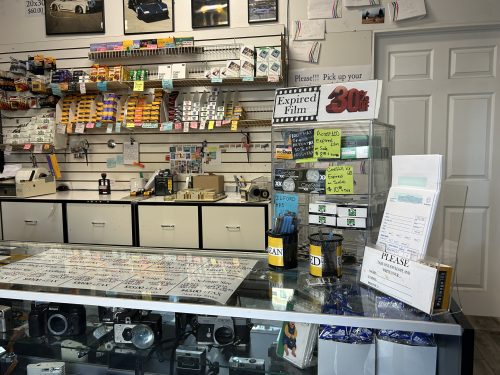
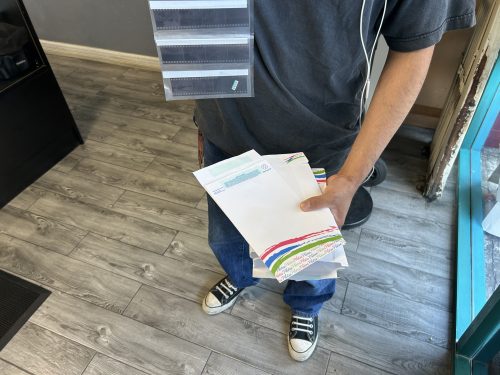
At Gold One Hour Photo on Vermont Avenue in Los Angeles’ Koreatown, customers stream in throughout the day. Most are young people buying fresh rolls of film or dropping off photos to be developed.
A growing number of Gen Z consumers, born between 1997 and 2012, are embracing the culture and products of earlier generations. Analog items that require more time and effort, such as film cameras and vinyl records, are gaining new fans alongside fashion trends once considered outdated.
Braxton Apana, 25, is one of them.
“The process of waiting to see how the photos turn out is part of the fun,” he said while buying film at the photo lab. “They don’t always come out the way you expect, and that unpredictability is actually part of the appeal.”
Apana added that grainy or blurry film photographs have a warmth that comes from their imperfections.
April Gomez, an employee at the photo lab, said many of its customers range from high school students to people in their mid-20s.
“At least 50 to 100 people a day come in for their film needs,” Gomez said.
Why Gen Z Nostalgia Reaches Into an Unlived Past
A recent NBC News poll found that 47% of adults ages 18 to 29 said they would rather live in the past than the present if given the choice. Among them, 33% said they would prefer to return to a period within roughly the past 50 years.
Experts describe the phenomenon as a form of “cultural nostalgia,” in which people feel emotionally attached even to periods they never personally experienced.
Unlike personal nostalgia, which is rooted in memories from one’s own life, cultural nostalgia can develop through parents’ stories, movies, fashion, music and other forms of popular culture.
Psychiatrist Dr. Susan Chung said people can form emotional connections to certain eras through indirect experiences.
“Stories from parents, movies and music can all create an emotional connection to a particular period,” Chung said. “Even if someone never actually lived through that time, repeated images suggesting that it was more stable than the present can create a sense of familiarity or longing.”
The 1990s and Y2K Feel New Again
The phenomenon is also visible in fashion.
Low-rise bottoms, capri pants, flared denim, vintage-wash T-shirts and classic retro sneakers have all gained popularity among Gen Z consumers.
Hyunseo Park, art director at casual fashion brand Cotton Citizen, said the 1990s and early 2000s feel fresh to younger consumers precisely because they did not experience those decades firsthand.
“For Gen Z, the 1990s and early 2000s are periods they didn’t personally live through, so they feel new, and I think that is part of the appeal,” Park said. “Our brand has also recently been presenting styling inspired by our past archives.”
Casio watches, which enjoyed widespread popularity in the 1980s and 1990s, are also attracting renewed attention.
On Reddit, users have shared reactions saying they stopped wearing smartwatches after switching to Casio watches, while others said having fewer notifications on their wrists helped them check their phones less often.
From Vinyl Records to Film Cameras
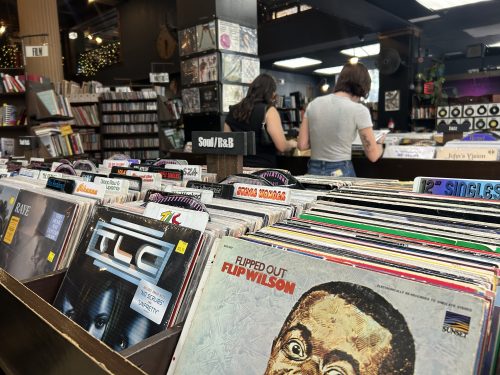
The same Gen Z Nostalgia can be seen across Los Angeles, where young people are frequenting vintage shops, bookstores and record stores.
At The Last Bookstore in downtown Los Angeles, 21-year-old Luke Coehler was browsing through vinyl records.
“There’s something appealing about being able to physically own the music you like,” Coehler said. “I like the experience of being able to touch it and keep it.”
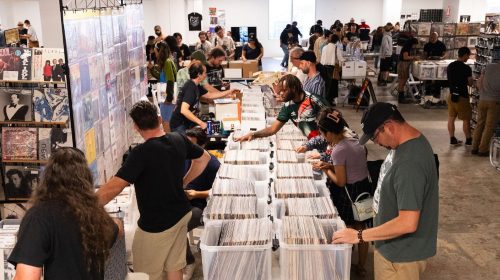
The resurgence was also visible at VinylCon, a major record fair held in Los Angeles on Aug. 22 and 23. According to organizers, more than 4,000 people attended the event.
One participating vendor wrote on social media that the event showed how vinyl can connect generations, adding that even young children were buying their first records.
For a generation surrounded by smartphones, streaming services and constant notifications, the attraction of an earlier era may lie partly in what it lacks. Waiting for film to be developed, handling a physical record or wearing a watch without notifications offers an experience that feels slower, more tangible and less predictable.
For many young people, the appeal of the past may have little to do with actually remembering it. It is precisely because they never lived through those decades that the past can feel new.