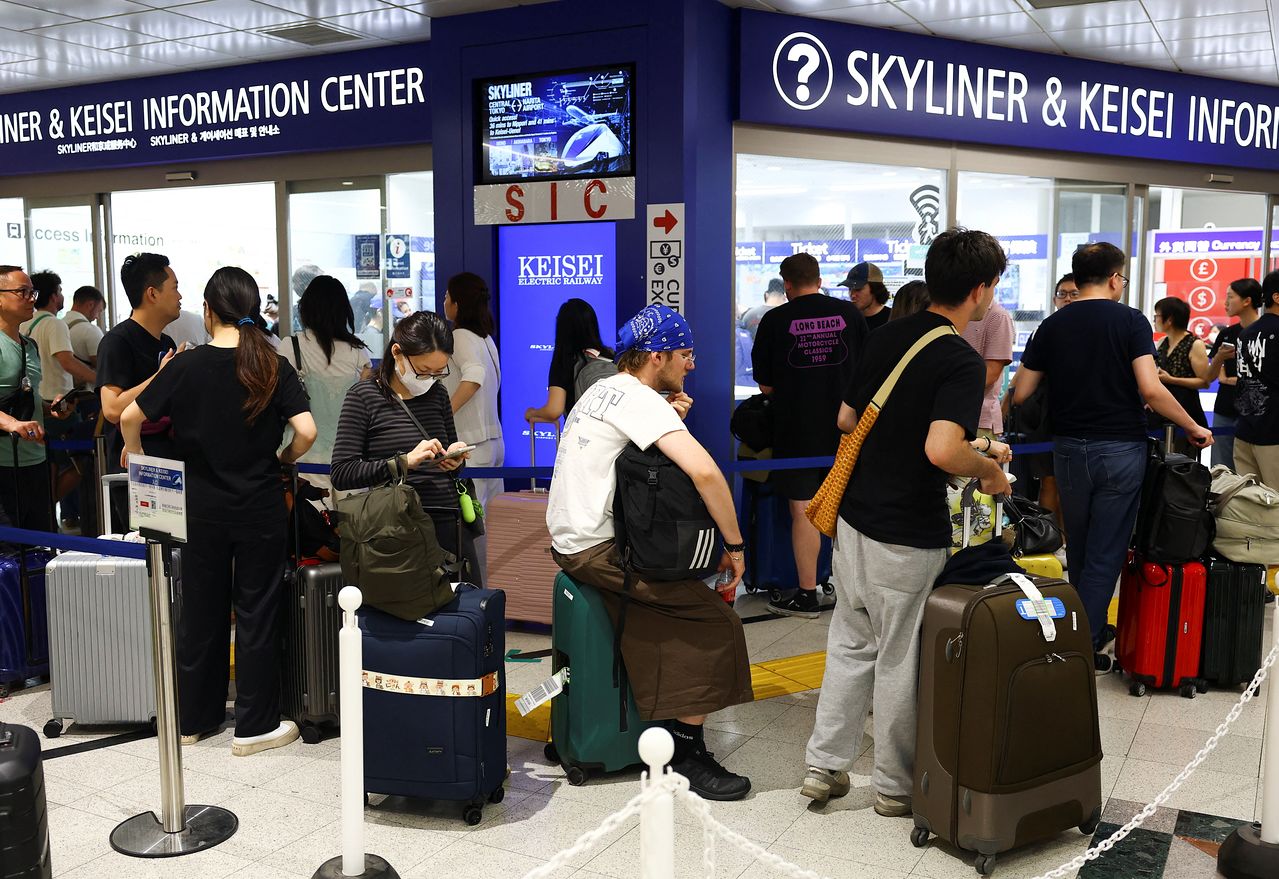
Travelers to Japan who purchase items at duty-free shops will now need to complete a new procedure at the airport before checking in their luggage. Tourists must obtain customs verification to prove they are taking the purchased goods out of the country. This change comes as Japan shifts its foreign tourist duty-free system to a post-purchase refund method starting on the 1st.
Previously, shoppers could purchase items at prices excluding the consumption tax, but now they must pay the full amount including tax and receive a refund upon departure after confirming the export of the goods. For a 100,000 yen item subject to a 10% consumption tax rate, shoppers must pay 110,000 yen upfront.
The duty-free eligibility applies when purchases at the same store total 5,000 yen (approx. 42,400 KRW) or more before tax in a single day, and export verification must be completed upon departure within 90 days of the purchase date.
The Japanese government altered this system because of a series of organized frauds where duty-free goods were resold domestically instead of being brought overseas. Authorities noted consecutive cases of high-value and bulk duty-free goods suspected of being circulated locally, and explained that recovering taxes is difficult even if detected at departure.
According to Jiji Press and other outlets, seven Chinese nationals purchased 7.7 billion yen (approx. 65.1 billion KRW) worth of watches, bags, and cosmetics duty-free at department stores in Osaka in 2022, and were ordered to pay 760 million yen (approx. 6.4 billion KRW) in consumption tax. They acted as proxies buying items using funds provided by resellers. However, most of them had already departed, leaving actual collections at only 2 million yen (approx. 17 million KRW).
Precautions and Airport Procedures for the New Japan Tax-Free Shopping System
As these regulations bring significant confusion and inconvenience to overseas shopping, industry insiders advise shoppers to exercise caution when purchasing consumables like snacks and cosmetics.
Even if bought alongside other items, if snacks or cosmetics are consumed beforehand, the refund for the remaining products may also be denied. Therefore, it is better to pay for items intended for local consumption separately. On the other hand, non-consumables like clothing and electronics can still qualify for export verification upon departure even if they were used during the trip.
At the airport, travelers must complete customs checks before checking their baggage. Scanning a passport at dedicated terminals located in international departure lobbies will indicate whether an inspection is necessary. Green means the process is complete, while red requires showing the purchased items to a customs officer. Checking bags first without being able to present the items may result in a forfeited refund.
Refunds are issued not by customs, but by the purchasing store or a designated refund agency. Methods vary by store, offering cash at the airport, cards, or account transfers. Because services differ by retailer, shoppers should check the refund method, payout timing, and fees at the time of purchase.
Japanese Airports Adapt with Self-Service Refund Terminals
Japanese airports have also taken steps to adapt. Airports heavily frequented by foreign visitors, such as Haneda, Narita, and Naha, introduced self-service cash refund systems starting today. Refunds can be received in Japanese yen at terminals supporting seven languages including Korean. These are separate from the customs export verification terminals.
Jiji Press reported that Haneda Airport relocated its customs verification process from after the security screening to before it, implementing confusion-prevention measures such as deploying guide personnel.