The rise of K-pop dance in Los Angeles is redefining cultural boundaries. Following Blackpink’s world tour stop at SoFi Stadium on July 12 and ahead of KCON LA 2025’s opening on August 1, Korean culture—often referred to as “K-code”—is making its mark on the city, with K-pop dance at the center.
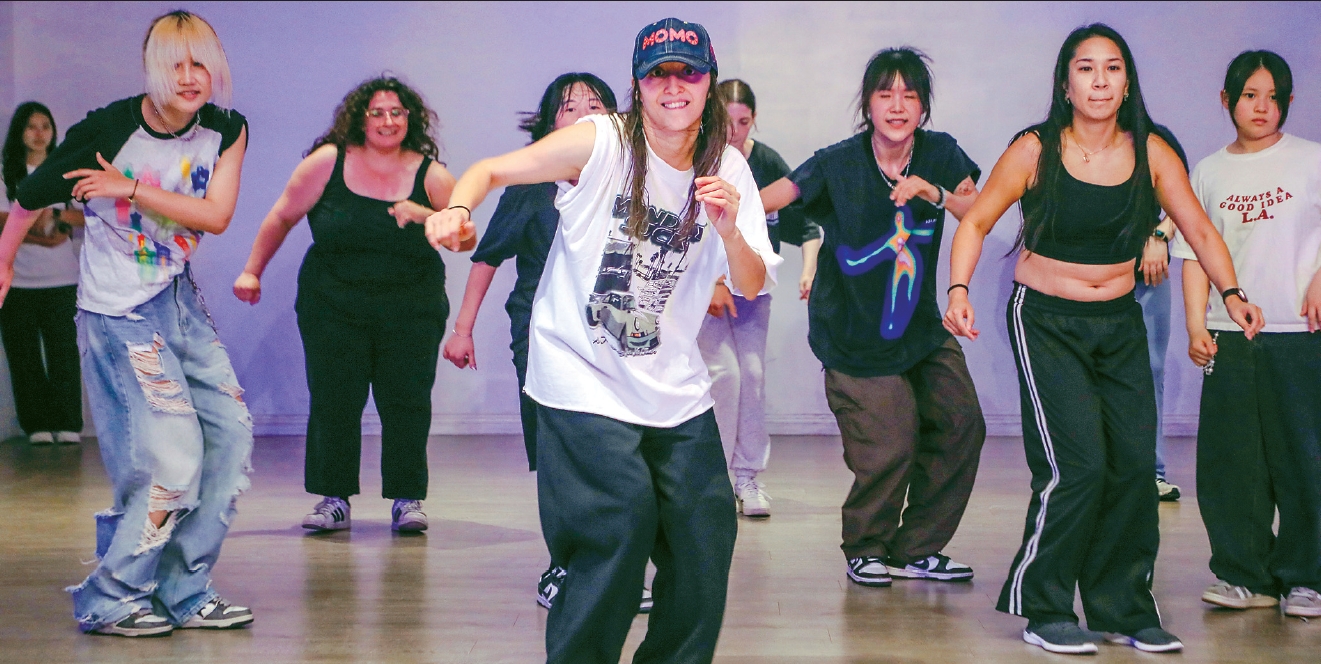
For many participants, these dance routines are more than choreography. They offer a direct pathway to Korean language, etiquette, and even cuisine. Allison Rodriguez, a Hispanic instructor at Debut Dance District in Koreatown, described her studio as “a little Korea.” A fan of NCT 127, she now comfortably uses Korean terms like “daebak” (awesome) and “chweh-ae” (bias), and says K-pop inspired her to explore honorifics and Korean manners.
Studios like Debut Dance District, NK Dance, Rūts Dance, PlayTime LA, Eulogia’s Studio, FlowMotion Dance, and LA Dance Fit have sprung up across Los Angeles, especially in Koreatown. Each location serves roughly 100 students, many of whom are not Korean. Including studios in Orange County, the number is likely even higher.
Students range from elementary schoolers to adults in their 40s. Most are from non-Korean backgrounds and bring diverse motivations. Some want to express themselves, others seek confidence, and many simply love K-pop. Ria Julian, a Filipina instructor at Rūts Dance and FlowMotion Dance, said she grew up around K-pop events in LA and naturally became a fan. “It gave me positive energy during school,” she said.
Classes average $20 per hour, and it typically takes at least four sessions—around $100 total—to master the choreography for a single K-pop song. For Skye Thienapiral, a 9-year-old student at Debut Dance District, the experience has been transformational. Her mother, Annie Kumpibal, said the once-introverted child became more confident and outgoing after learning K-pop routines. Similarly, Stacy, a student at Roots Dance, enrolled to meet fellow K-pop fans and says dancing with peers has strengthened her emotional wellbeing.
Parents are getting involved too. Orissa Davila, who lives in West LA, said her teen’s interest in K-pop sparked the family’s curiosity about Korean culture. “After watching Rosé from Blackpink make kimchi fried rice, we bought ingredients at H Mart and made it together,” she said. “Even soju and the ‘apartment’ drinking game from the video got us interested.”
According to the Korea Creative Content Agency (KOCCA), K-pop’s overseas revenue exceeded ₩1 trillion (about $725 million) for the first time in 2023. A 2025 survey by the Korean Ministry of Culture, Sports and Tourism found that K-pop has remained the No. 1 image associated with Korea for eight consecutive years. That influence is spreading through institutions like NK Dance Studio, which is connected to major talent agencies like SM, YG, and HYBE. Studio director Nikki Jang said students who show strong visual presence, performance quality, and confidence may be referred directly. Graduates include Eric of The Boys, as well as Joonie and Jackie from Ichillin’.
Some studios are expanding their offerings to include full cultural immersion. Eulogia’s Studio is launching a two-week summer program in Korea that combines dance and vocal training, professional photoshoots, agency tours, Seoul sightseeing, and Korean history education. Director Iris Chung said the goal is to support students’ growing curiosity about Korea sparked by K-pop dance.
Once seen as fan choreography, K-pop dance is now a cultural conduit—connecting people of all backgrounds to Korean language, values, and aspirations. In Los Angeles, that connection grows stronger with every step.
BY YEONGCHAE SONG [song.yeongchae@koreadaily.com]