North Korea convened its Supreme People’s Assembly, its highest legislative body, from January 22 to 23 but refrained from issuing any external messages to the United States or South Korea. Notably, North Korean leader Kim Jong-un did not attend the assembly.
Analysts suggest Pyongyang is taking a cautious approach amid diplomatic uncertainties as U.S. President Donald Trump ramps up his foreign policy efforts, including pressure on Russia to end the war in Ukraine.
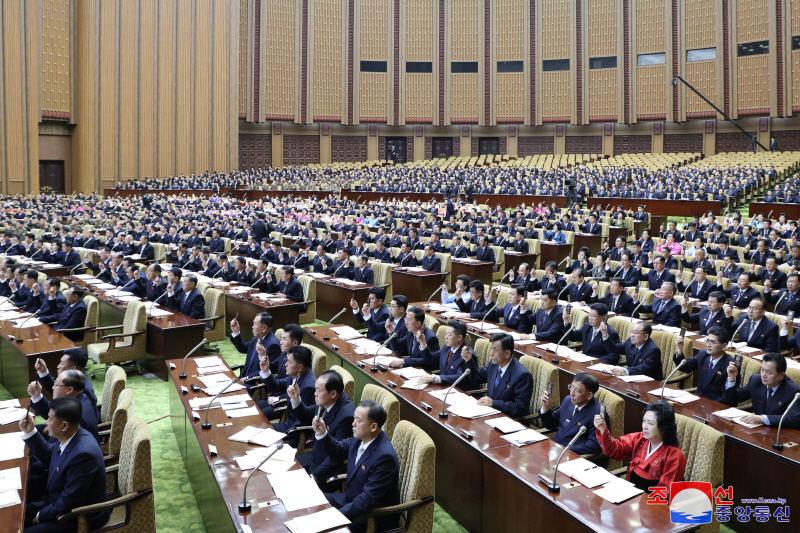
According to the Korean Central News Agency (KCNA) on January 24, the 14th Supreme People’s Assembly was held at the Mansudae Assembly Hall, discussing seven agenda items, including a review of last year’s policies and plans for 2024. The assembly announced a budget increase to 103.8% of the previous year, allocating 15.7% of expenditures to defense.
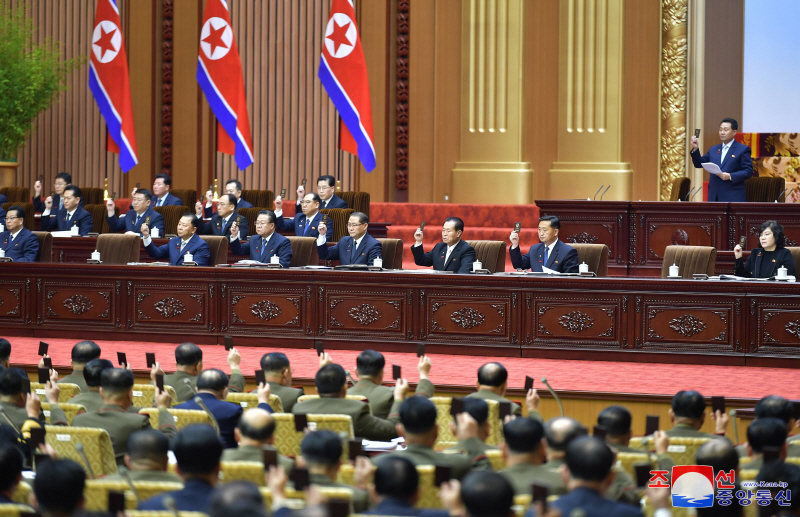
Additionally, it approved renaming the Central Court and Central Prosecutor’s Office to the Supreme Court and Supreme Prosecutor’s Office, respectively, signaling an emphasis on strengthening law and order domestically.
Despite these administrative measures, the anticipated message to the Trump administration was absent. Observers previously speculated that the timing of the assembly, just days after Trump’s inauguration, was chosen to issue a statement to the new U.S. administration. However, North Korea appeared to be holding back, monitoring the situation instead.
Meanwhile, President Trump, inaugurated on January 20, referred to North Korea as a “nuclear power” and expressed interest in engaging with Kim. During a Fox News interview, Trump responded affirmatively to a question about “reaching out” to Kim, stating, “I will.” Despite these overtures, Kim has yet to show a response.
Lim Eul-chul, a professor at Kyungnam University’s Institute for Far Eastern Studies, remarked, “North Korea likely sees little benefit in reacting preemptively while the Trump administration’s North Korea policy remains unclear.” He added that Trump’s pressure on Russian President Vladimir Putin to end the Ukraine war might also influence North Korea’s cautious stance.
On January 22, Trump warned on his social media platform Truth Social that without negotiations, Russia and “various other participating countries” could face tariffs and sanctions. Observers suggest North Korea, which reportedly deployed over 10,000 special forces to the Kursk battlefield, could fall under Trump’s targeting as part of his efforts to negotiate peace.
There was speculation that the assembly might introduce constitutional changes reflecting Kim Jong-un’s “two-state theory,” emphasizing a division between North and South Korea. This included possible amendments adding territorial provisions and removing unification-related language. However, such measures were neither confirmed in official reports nor highlighted during the session.
Experts believe North Korea may be exercising caution due to South Korea’s turbulent domestic political landscape. Hong Min, a senior researcher at the Korea Institute for National Unification, explained, “Pushing constitutional changes now could risk framing North Korea negatively in South Korean public opinion, triggering unintended consequences.” He suggested Pyongyang might delay or quietly shelve the two-state theory to avoid provoking a reaction.
BY HYUNJU PARK, YOUNGNAM KIM [kim.youngnam@koreadaily.com]