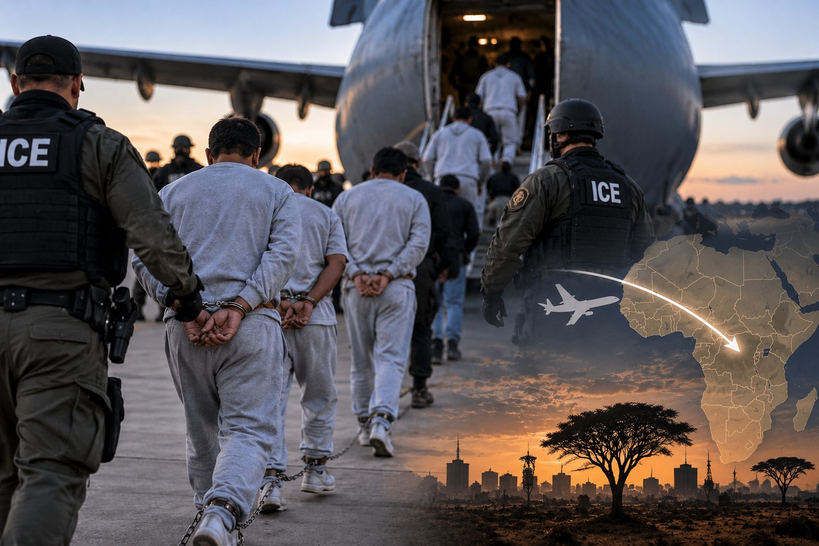
The third-country deportation policy, which involves sending immigrants to nations with which they have no ties, is currently fueling intense controversy.
Supreme Court Allows Continued Deportations
The U.S. Supreme Court ruled on the 29th to temporarily allow the Trump administration’s policy of deporting immigrants to third countries—nations other than their own—where repatriation is deemed difficult. This decision stays a lower court order that previously required the government to inform immigrants of their destination and grant them an opportunity to challenge the move. The Supreme Court is scheduled to hold oral arguments regarding the legality of this policy this coming December.
Human Rights Concerns and Forced Removals
Reports, including investigations by the LA Times, indicate that some individuals were forcibly placed on planes without prior knowledge of their destination. Testimonies suggest that in some instances, federal agents used pepper balls to subdue detainees who resisted boarding flights to Africa. The policy has affected individuals from various nations, including Iran, Bangladesh, and Afghanistan, some of whom had previously secured protection from repatriation under the Convention Against Torture (CAT) due to the risk of persecution.
Escalating Risks in Unstable Regions
Many of those affected have been sent to nations like the Central African Republic, where the U.S. State Department currently advises against travel due to ongoing civil war, terrorism, and instability. While the Trump administration maintains that this policy is a necessary measure when home countries refuse to accept their citizens, human rights groups argue that it exposes vulnerable migrants to life-threatening risks. As of now, more than 25,000 immigrants have been sent to third countries under this administration’s directive. 강한길 기자