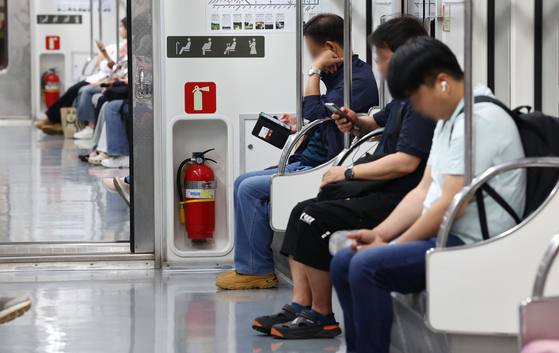
The Seoul subway has been recognized by U.S. CNN as one of the world’s best rapid transit systems, receiving high praise for its exceptional cleanliness, safety, and operational efficiency. In particular, the media outlet spotlighted advanced convenience features such as uninterrupted mobile phone and internet service even deep underground, alongside comfort amenities like heated seats during the winter.
CNN’s Global Ranking Highlights Seoul’s Transit Excellence
On October 17 (local time), CNN published an article titled ’18 of the world’s best metro systems,’ showcasing major urban subway networks across the globe, including Seoul. Describing the experience, CNN advised readers worried about losing mobile and Wi-Fi signals underground to see what is possible in South Korea’s capital.
The network noted that, true to a hyper-modern metropolis’s tech-forward identity, Seoul subway passengers were among the first in the world to make uninterrupted phone calls, browse the internet underground, and watch television on screens installed throughout the trains. The inclusion of heated seats inside climate-controlled cars to make winter travel comfortable was also cited as a major advantage.
Furthermore, CNN described the system as spotless, efficient, and safe, adding that with reasonable fares and coverage spanning most of the city, many experts rank it as the world’s best. First opened in 1974 with Line 1, the network has grown into a showcase of South Korea’s technological prowess, attracting constant interest from global urban transit experts.
Scale of the Seoul Network and Other Global Metros
According to CNN, the core nine lines of the Seoul subway span approximately 327 kilometers, and when including metropolitan railway networks managed by various operators, the total length reaches about 1,302 kilometers. Daily ridership hits roughly 7 million people.
Alongside Seoul, CNN highlighted subway networks in global cities such as Hong Kong, Tokyo, Beijing, and Shanghai. Hong Kong’s MTR was praised for maintaining high schedule reliability and efficiency despite complex geography, boasting a 99.9% on-time rate. Tokyo’s subway was characterized by its sophisticated scheduling and extreme congestion, with trains running up to 24 times an hour while handling passenger loads well beyond designed station capacities. For Beijing and Shanghai, CNN emphasized rapid growth and massive network scales, with Beijing handling about 10 million passenger trips daily across 490 stations, and Shanghai averaging over 10 million passengers per day across 508 stations. Meanwhile, metro systems in London, Paris, and New York were celebrated as historical and cultural symbols of their respective cities.