Across the U.S., new college graduates are facing a brutal reality: no one’s hiring. With job rejections piling up, even top STEM majors are being shut out of entry-level roles. For international students, the pressure is even greater—many are giving up and going home.
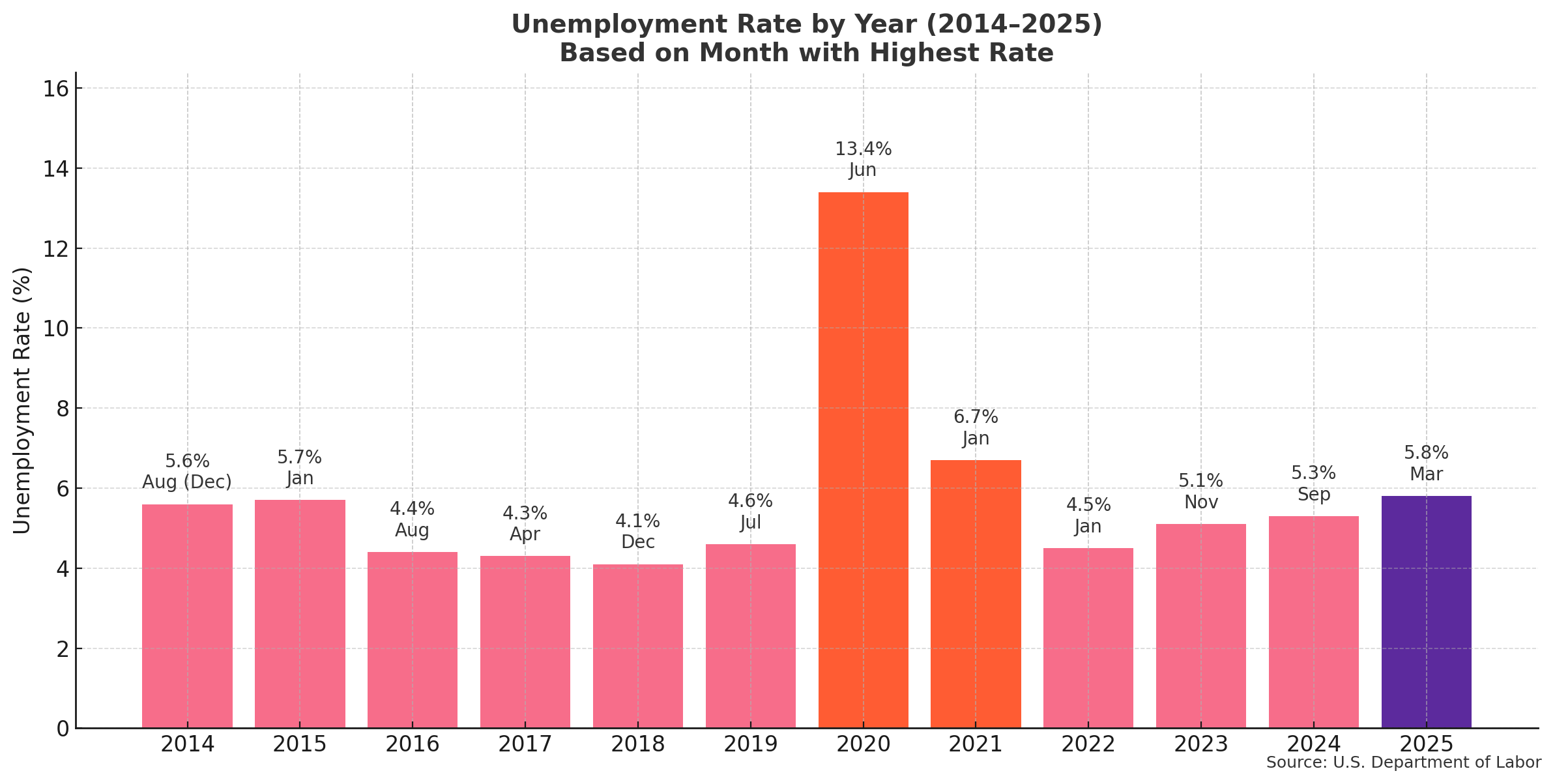
According to the U.S. Department of Labor, the unemployment rate for 22- to 27-year-olds who recently graduated hit 5.8% in March. That’s the highest rate since November 2013, excluding the COVID-19 spike.
Gyuhee Kim (25), a communications graduate from the University of Utah, recently decided to return to South Korea after exhausting her Optional Practical Training (OPT) period, which allows international students to work for 1–3 years after graduation. “I applied to over 50 companies but only heard back from three,” she said. “Even those had bad conditions. I didn’t feel secure staying here with no job.”
Sungjun Kim (23), a USC computer science major, says the tech job market is worse than expected. “Even with a green card, it’s almost impossible to find a company hiring entry-level workers right now,” he said. “I’ve started applying to jobs that aren’t even in my field.”
A Federal Reserve Bank of New York report shows that 41% of recent grads are now underemployed—working in jobs that don’t require a college degree.
Vivian Byun (28) graduated from San Diego State University with a degree in international business but now works in office support at an accounting firm. “I sent out dozens of resumes before graduation. Nothing came back,” she said. “Now I’m earning around $17 an hour, and I’m staying only because it’s tied to my green card process.”
Even STEM Majors Aren’t Safe
The hiring freeze is widespread, regardless of major. According to U.S. Census Bureau data from February, unemployment is high across a range of fields:
- Anthropology (9.4%)
- Computer Engineering (7.5%)
- Commercial Art & Graphic Design (7.2%)
- Fine Arts (7%)
- Sociology (6.7%)
- Chemistry (6.1%)
- Information Systems & Management (5.6%)
- Public Policy (5.5%)
- Economics (4.9%)
Even students from “hot” majors like tech and business are struggling to land jobs.
Visa Lottery Keeps Shutting International Grads Out
International students must also navigate the U.S. visa system. Most work under OPT, but to stay longer, they must win an H-1B visa—granted only through a random lottery.
At a UCLA job fair on April 15, over 150 students came with resumes in hand. But Kate Smith, a recruiter from Medtronic, said visa issues often keep companies from hiring international grads. “If someone doesn’t win the visa lottery, we have to start over. That makes companies hesitant to sponsor at all.”
According to U.S. Citizenship and Immigration Services (USCIS), 479,953 people applied for H-1B visas for the 2024–2025 fiscal year. Only 28.16% (135,137 applicants) were selected. In 2023–2024, it was just 25%—roughly 1 in 4.
Sereum Bak (23), graduating from the University of Utah this August, said, “Around 90% of my international friends are thinking of going home. We just don’t have many options with the visa system.”
AI and Budget Cuts Are Wiping Out Entry-Level Jobs
It’s not just visas. Many companies are cutting jobs instead of hiring. A report from the National Association of Colleges and Employers (NACE) in April said employers expect to increase hiring by just 0.6% this year.
Samuel Kim (48), an AI developer at Oli Health, said his company isn’t hiring entry-level engineers anymore. “Big companies used to bring in new grads and train them. Now they’re cutting staff, and AI is replacing routine work. It’s making things a lot tougher.”
Meanwhile, academic research roles are also disappearing due to federal budget cuts started under the Trump administration.
Seungyeop Lee (26), who graduated from UCLA and is looking for a job in medical research, said, “Universities that depend on government grants are freezing hiring. Some even canceled offers to grad students after realizing they couldn’t fund them.”
BY YEONGCHAE SONG [song.yeongchae@koreadaily.com]