
Driven by a singular desire for freedom, North Korean defectors risked their lives to escape their homeland. After enduring a difficult journey through third countries, they arrived in the United States, only to be met with discrimination and prejudice instead of freedom, hope, and happiness.
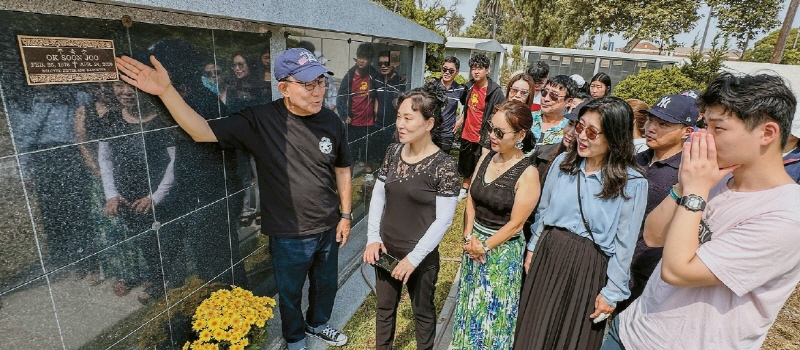
On July 12, the North Korean Defectors Conference in the United States was held in Koreatown, Los Angeles, commemorating South Korea’s first-ever “North Korean Defectors Day.”
Over 50 defectors shared their pain and stories. Among them were Jung-soon Kwon and Myung-ok Ko, who spoke of their harrowing experiences and the harsh realities they faced in society after defecting.
Three forced repatriations and resettlement in the U.S.
Jung-soon Kwon, originally from Dancheon, South Hamgyong Province, was forcibly repatriated to North Korea three times. When asked how she managed to defect four times, she briefly mentioned, “I had the help of my parents’ connections in the Ministry of State Security, and several high-ranking officials were among my relatives.”
In July 1997, Kwon made her first defection to China due to poverty. She said, “Both my parents worked in the Ministry of State Security, so I didn’t know what poverty was. But after they passed away during the ‘Arduous March,’ I was left destitute.”
Kwon ended up in Yanji, China. She carefully recounted, “It was human trafficking. I was sold to an unknown Chinese man for money and lived with him for three years, during which time I had a daughter.” At the time, Kwon was 26 years old.
After being forcibly repatriated from China in 2003, she defected again in February 2009, this time reaching South Korea via Kunming, China, and Thailand. However, she was met with discrimination and prejudice in South Korea. She explained, “I got my first paycheck of 1.3 million won (approximately $940 in today’s currency) at a restaurant job, only to later find out that other employees received 1.8 million won.”
She also faced prejudice from South Korean police. After a man at a social gathering groped her friend and slapped her, she reported it to the police. However, the responding officers suspected Kwon and her group of being illegal immigrants.
Kwon moved to the United States in 2017. She initially came to visit a Chinese friend she had met in China and eventually met her Korean husband. In the U.S., she continued to face prejudice, leading her to run an organization for defectors. As the president of the “North Korean Human Rights and Unification Coalition in the U.S.,” she advocates for the human rights of defectors.
“I have rarely seen anyone, whether in South Korean politics or the U.S., genuinely speak out for the rights of defectors,” she said. “Some Korean-American organizations even exploit the issue of defectors for profit. I hope people genuinely care about defectors.”
A daughter left behind in China
Myung-ok Ko, originally from North Hamgyong Province, came directly to the United States without passing through South Korea. In 2008, a month after giving birth to her son, she defected from North Korea, crossing a cold river while carrying her newborn.
She arrived in the U.S. in 2015 after passing through China, Vietnam, Laos, and Thailand. Now residing in Utah, she explained her decision to come to the U.S.: “I was planning to go to South Korea from a refugee camp in Thailand, but my son wanted to go to an English-speaking country.”
Ko endured numerous hardships due to her status as a defector. When asked about the difficulties she faced, she struggled to speak for a moment. “Even thinking about it now, it’s hard to talk about,” she said. “It remains a trauma. Many people took advantage of me knowing I was from North Korea.”
She explained, “In China, many North Korean women are sold like objects through human trafficking. They are sold for 1,000 Chinese yuan (approximately $138) to 5,000 yuan depending on their age.”
Three years after Ko defected, her daughter also escaped to China. “My daughter mingled with Chinese friends, but their parents would not let them play with her because she was North Korean,” Ko said. “When she grew up, she was even beaten by Chinese people for being North Korean.”
Ko’s hope is for a dignified life. “In China, my son couldn’t attend school due to our status,” she said. “I hope he studies hard in the U.S. and contributes to society.”
Addressing the discrimination and prejudice faced by defectors, she said, “I hope people embrace the North Korean defectors with compassion. I also urge the international community, including the U.S., to provide assistance in various ways.”
BY KYEONGJUN KIM, YOUNGNAM KIM [kim.kyeongjun1@koreadaily.com]