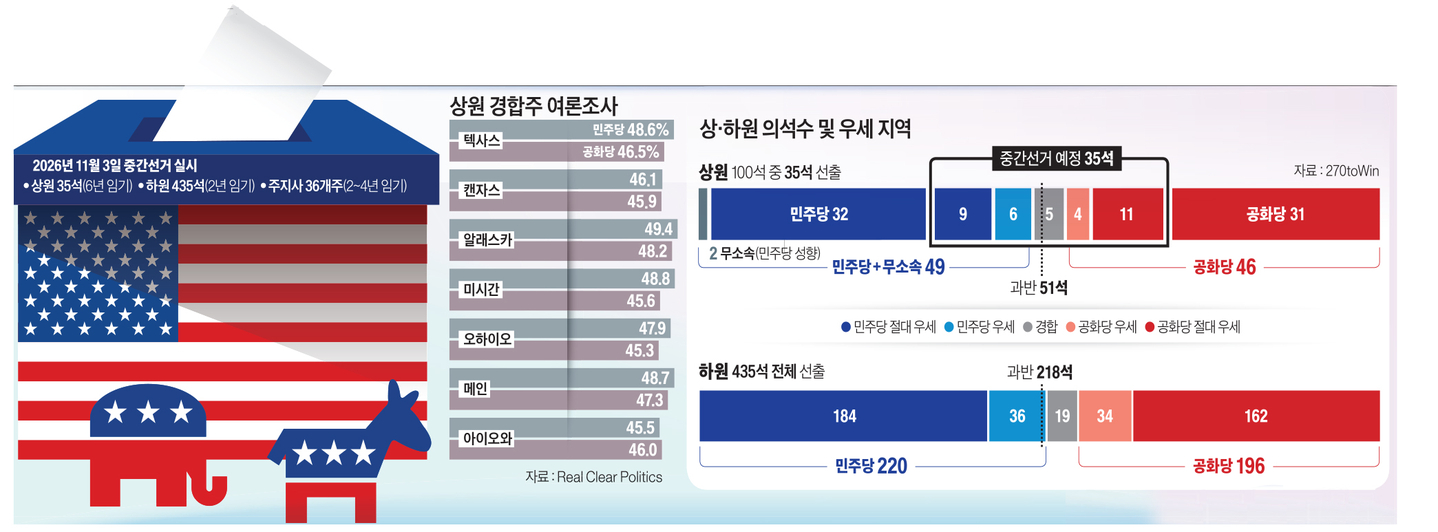
When emotions run high, it is easy to lose a sense of cold reality, and the outlook for tomorrow’s US midterm elections is no exception. While mainstream media leans heavily toward predicting a Republican rout driven by anti-Trump sentiment and the MAGA movement, history suggests that the dynamics at play are far more complex than a simple wave election.
The Presidential Penalty and Historical Trends
Midterm elections typically exhibit the ‘presidential penalty’ phenomenon, where the incumbent party suffers losses. Since 1934, only three times have ruling parties managed to increase their seats in the House: under Franklin D. Roosevelt in 1934, Bill Clinton in 1998, and George W. Bush in 2002. This historical pattern makes losses for the ruling party almost expected, compounded this cycle by massive polling gaps, low approval ratings for Donald Trump, and public fatigue over inflation and foreign conflicts.
Battleground States and Republican Strongholds
Despite mainstream projections of a massive Democratic ‘blue wave,’ flipping both chambers of Congress completely remains a steep hill to climb. Analysts must look past standard national polling and examine how well the Republican party can weather the storm in critical battlegrounds like Alaska, Texas, Michigan, Iowa, Ohio, Kansas, Maine, and South Carolina. Many of these tight races are taking place in traditionally conservative strongholds, indicating that polling data often overstates the actual vulnerability of incumbent candidates on election day.
Legislative Impact and Presidential Power
If the opposition party manages to secure a majority in the House, they gain vital leverage to block the administration’s agenda, initiate budget battles, and pursue impeachment inquiries. However, even with a divided legislature, executive authority via executive orders provides ample room for a president to govern effectively, ensuring that the second half of the term will remain a fiercely contested political battleground.